Visual Studio Code Alternatives
A curated collection of the 7 best alternatives to Visual Studio Code.
The best alternative to Visual Studio Code is Cursor. If that doesn't suit you, we've compiled a ranked list of other Visual Studio Code alternatives to help you find a suitable replacement. Other interesting alternatives to Visual Studio Code are: Antigravity, Devin Desktop, Blackbox IDE and Trae.
Visual Studio Code alternatives are mainly AI Coding tools but may also be AI IDEs and Editors tools. Browse these if you want a narrower list of alternatives or looking for a specific functionality of Visual Studio Code.


Built to make you extraordinarily productive, Cursor is the best way to code with AI
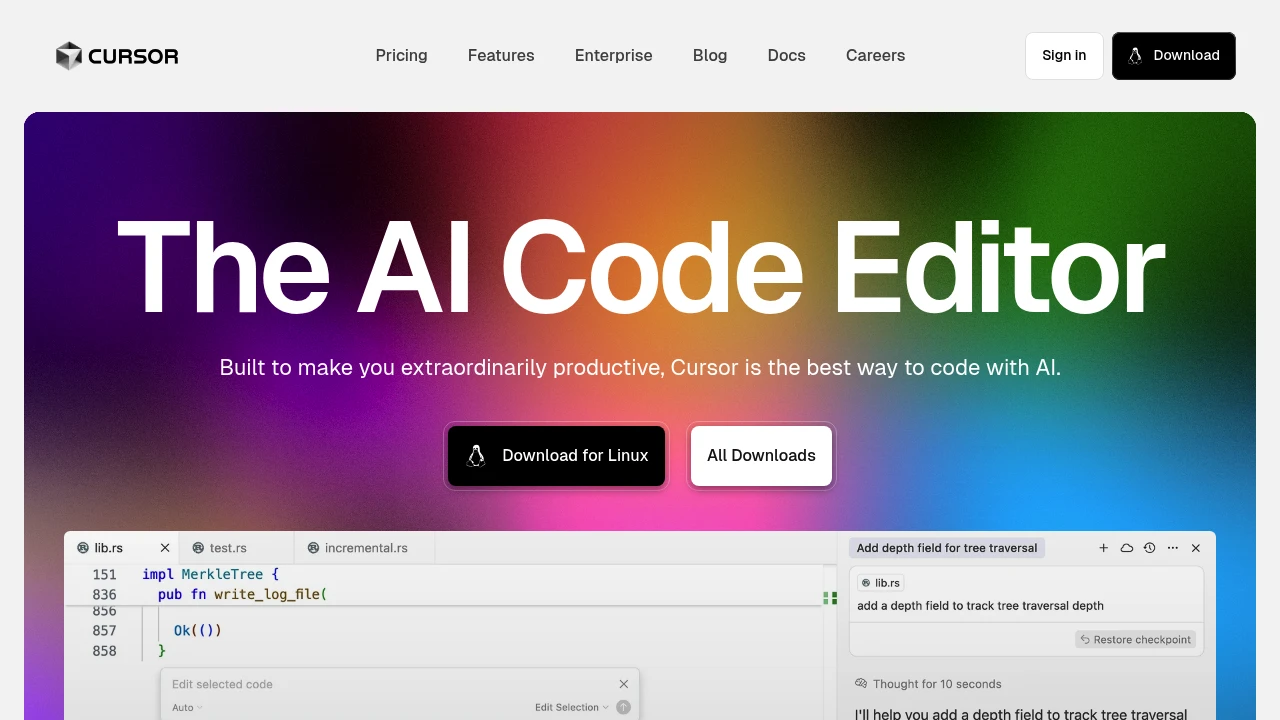
Cursor is an AI-powered code editor that transforms how developers write and edit code through intelligent automation. Built for modern development teams, it combines traditional editing with advanced AI assistance to speed up coding workflows. The platform targets developers who want smarter code completion and AI-driven editing without sacrificing control.
Key Highlights
- AI-powered code completion and editing suggestions
- Clean, responsive interface that integrates with existing workflows
- Real-time code analysis and intelligent recommendations
- Support for multiple programming languages and frameworks
- Seamless integration with popular development tools
- Background processing for faster performance
What Makes It Different
Cursor sets itself apart by offering context-aware AI assistance that goes beyond basic autocomplete. The editor learns from your codebase and coding patterns to provide relevant suggestions. Its AI agents can handle complex editing tasks while maintaining code quality and consistency.
Features & Capabilities
The platform offers intelligent code completion that understands project context and coding style. Users can leverage AI-powered editing for refactoring, bug fixes, and code optimization.
The editor supports collaborative development with real-time sharing and version control integration. Background agents work continuously to analyze code and suggest improvements without interrupting the development flow.
User Ratings and Testimonials
Cursor has an average rating of 4.8 out of 5 stars from over 1,200 reviews on various platforms.
Users praise the AI-powered code completion and editing features. They find the interface clean and responsive. Many appreciate the seamless integration with existing workflows. Some users mention occasional lag with large codebases. They also note that the AI suggestions can sometimes be overly aggressive for simple tasks.
Pricing & Value
Cursor offers several pricing plans:
- Hobby: Free with Pro two-week trial, limited Agent requests, and limited Tab completions
- Pro: $20/month for extended Agent limits, unlimited Tab completions, and Background Agents access
- Ultra: $200/month with 20x usage on all AI models and priority access to new features
Teams pricing starts at $40 per user monthly with Privacy Mode enforcement, admin dashboard, and centralized billing. Enterprise offers custom pricing with enhanced usage, SCIM management, and priority support.
The free Hobby plan includes a two-week Pro trial, making it easy to test premium features before committing to paid plans.
Looking for alternatives to other popular tools? Check out other posts in the alternatives series and flowtools.co, a directory of best AI tools with filters for tags and categories for easy browsing and discovery.

Google Antigravity helps developers orchestrate AI agents, inspect artifacts, and guide software work across tasks.
Google Antigravity is an agentic development platform for developers who want AI agents to help with software work. Its agent-first interface organizes work around tasks, artifacts, and feedback. Developers can follow what agents produce and steer the result while other work continues.
Key Highlights
- Orchestrate multiple subagents across development environments
- Run long workflows in the background
- Review artifacts and verification outcomes
- Provide feedback at the task level
- Download the development environment
What Makes It Different
The product treats agent work as something to manage across several tasks rather than a single chat reply. Artifacts provide concrete outputs to inspect, while verification outcomes help developers assess the work before accepting it. This is useful when implementation, research, and testing need separate attention.
Features & Capabilities
The agent-first surface supports background workflows while other agents work on research, implementation, or testing. Developers provide guidance across the interface and its artifacts to change direction as the task develops.
Start with a contained repository task. Inspect the proposed files, run relevant checks, and review any commands or environment access before treating the result as finished. An agent completing a task does not establish that the software meets every requirement.
User Ratings and Testimonials
Evaluate it with a representative development task: compare the artifacts, test outcomes, and amount of manual review needed. Keep a record of unexpected changes and repeat the test on a second task.
Pricing & Value
Individual access is $0/month, with basic weekly rate limits and unlimited Tab completions and Command requests. Google AI Pro and Ultra provide higher limits and flexible AI credit pools. Business access is available through Google Cloud, with consumption-based options and eligible enterprise plans. Compare account eligibility and the usage allowance before sustained agent work.

Devin Desktop, formerly Windsurf, is an IDE and command center for coding agents with plan-dependent usage.
Devin Desktop, formerly Windsurf, is a coding IDE and command center for local and cloud agents. Windsurf became Devin Desktop on June 2, 2026. The classic editor remains available, while the Agent Command Center brings agent work into the main interface.
Key Highlights
- Coding IDE with the classic editor experience retained
- Agent Command Center for organizing agent work
- Existing editor settings, workflows, and extensions remain relevant
- Free inline edits and Tab completions
- Agent quotas and model access depend on the plan
- Existing legacy plans retain their transition terms
What Makes It Different
The rename brings the IDE under the Devin brand alongside Cloud, CLI, and Review. It does not mean that every Windsurf plugin is the same product as Devin Desktop. The transition FAQ distinguishes the desktop IDE from other integration paths and preserves existing plan terms.
Features & Capabilities
Developers can use the editor while managing coding-agent tasks from the command center. The existing Windsurf experience remains accessible rather than being removed by the rename. Organizations should review the updated application name and deployment guidance when managing desktop installations.
Paid plans provide access to more models and larger agent allowances. Usage depends on the model, task size, and reasoning required. Unlimited Tab completions or inline edits do not mean unlimited paid-model agent work. Legacy subscriptions should be assessed under their own retained terms.
User Ratings and Testimonials
Past Windsurf reviews describe earlier releases. For a current evaluation, test the editor and agent workflow on a representative repository and review the proposed code changes. No general productivity percentage is guaranteed.
Pricing & Value
- Free: light agent quota, limited models, unlimited inline edits and Tab completions
- Pro: $20/month
- Max: $200/month, with higher allowances
- Teams: $80/month team fee plus $40/month per full developer seat
- Enterprise: custom terms
Paid usage allowances refresh daily and weekly. Extra usage is available at API pricing; legacy Windsurf plans may differ.

BLACKBOX is your AI-Powered Coding Assistant so you can {Code} 10X Faster and Better

Blackbox IDE combines multiple AI models with coding tools in one platform for complete development workflows. This web-based IDE gives developers access to top AI models like GPT-5, Claude Sonnet 4, and Gemini 2.5 Pro. It targets developers who want AI-powered coding assistance with full development environment features.
Key Highlights
- Access to multiple premium AI models in one platform
- Web-based IDE with 4CPUs and 8GB RAM
- Autonomous coding agent for automated development tasks
- Voice agent for hands-free coding (Business plan and above)
- On-demand GPU access for intensive computing tasks
- Complete development workflow integration
What Makes It Different
Blackbox IDE stands out by combining AI model variety with a full development environment. Most coding assistants focus on single AI models or basic code completion. Blackbox offers multiple top-tier AI models, autonomous agents, and complete IDE functionality in one web-based platform.
Features & Capabilities
The platform provides a complete web-based development environment with integrated AI assistance. Core features include code generation, debugging support, and project management tools.
The autonomous coding agent can handle complex development tasks independently. Voice commands let users code hands-free.
The platform supports multiple programming languages and frameworks. Technical infrastructure includes scalable computing resources and GPU access for machine learning projects.
Pricing & Value
Blackbox IDE offers several pricing plans:
- Pro: $3.99/month with access to best AI models, autonomous coding agent, and web IDE with 4CPUs & 8GB RAM
- Business: $29.99/month with everything in Pro plus 3x more usage capacity and voice agent
- Ultimate: $99.99/month with everything in Business plus 20x more usage capacity and on-demand GPUs
- Enterprise: Custom pricing with training opt-out, SAML SSO, and dedicated support
All plans include access to top AI models like GPT-5, Claude Sonnet 4, and Gemini 2.5 Pro.
The main value of Blackbox IDE is combining multiple AI models with coding tools in one platform for complete development workflows.

Trae is an AI-native IDE for developers who want code completion, custom agents, and autonomous SOLO builds.
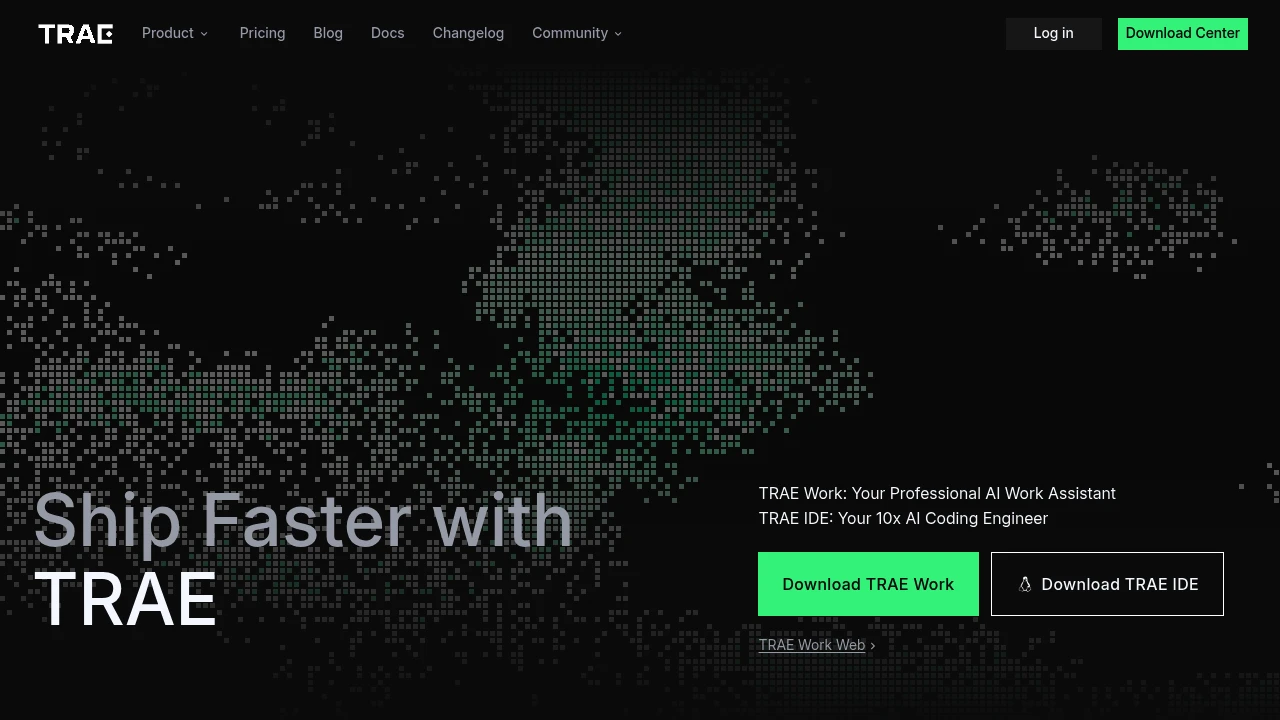
Trae is an AI-native IDE for developers who want an assistant inside the editor and an autonomous coding agent for larger tasks. It combines a traditional coding workflow with SOLO mode, custom agent teams, and codebase-aware context.
Key Highlights
- SOLO mode can plan development workflows, use tools, execute changes, and generate and deploy code for review
- IDE mode keeps agentic help inside a familiar coding workflow
- Built-in and custom agents can work as specialists or sub-agents for larger tasks
- MCP support lets agents pull in external resources when the task needs them
- CUE predicts next edits with Tab, including multi-line suggestions
- Privacy notes say code stays local, with temporary upload for indexing
What Makes It Different
Trae is strongest when you want a code editor and a more autonomous builder in the same product. The site describes IDE mode for daily coding and SOLO mode for larger tasks.
Its agent framework is also central. You can use built-in agents, create your own with specific tools and logic, or let agents call other agents as sub-agents.
Features & Capabilities
In the editor, Trae reads repository context and can use online searches or shared documents to improve answers. Custom rules tune AI behavior, while CUE handles fast edit prediction with one Tab press.
For agent work, Trae includes a preview tab that lets agents interact with browser elements, read console logs, and debug in real time. The privacy section says codebase files stay local, while indexing may temporarily upload files for embeddings.
User Ratings and Testimonials
Trae's own testimonials praise the interface, VS Code-like switching, fast code generation, and SOLO's ability to handle larger codebase changes. Cautions include requests for more model settings, local model support, and performance that may depend on network quality.
Pricing & Value
The following rates use monthly billing and automatically renew:
- Free: limited usage, Auto mode, 5,000 autocompletions/month, and 2 concurrent cloud tasks
- Pro: $20/month with $20 monthly usage, unlimited autocomplete, and up to 10 concurrent TraeWork tasks
- Pro+: $60/month with $60 usage (3x Pro) and up to 15 concurrent tasks
- Ultra: $200/month with $200 usage (10x Pro), model early access, and up to 20 concurrent tasks
Yearly billing is a separate option. The current public list contains these four plans; account-specific legacy subscriptions can differ.

Kiro is an agentic IDE, CLI, and web app for developers who turn prompts into specs, code, docs, and tests.
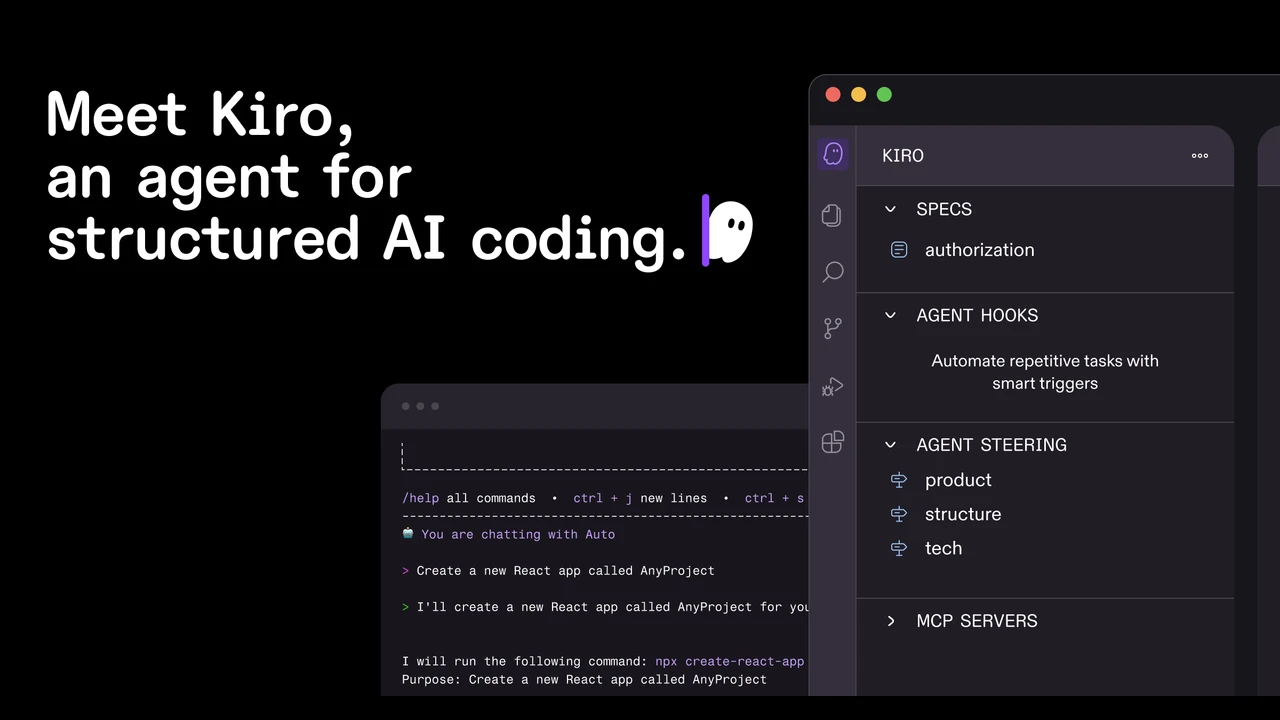
Kiro is an agentic coding environment for developers who want AI help with software delivery, not just code snippets. It turns a prompt into requirements, design notes, implementation tasks, code, docs, and tests across an IDE, CLI, and web.
Key Highlights
- Spec-driven development turns prompts into requirements, acceptance criteria, designs, and task lists
- IDE, CLI, and web agents for local work, terminal workflows, and cloud sessions
- Agent hooks run background tasks such as docs, tests, or performance checks
- Native MCP support connects Kiro to docs, databases, APIs, and other tools
- Built on Code OSS, with VS Code settings, themes, and Open VSX plugin import
- Per-prompt credit usage shows how much each request costs
What Makes It Different
Kiro is built around specs rather than chat alone. A natural language request becomes structured requirements, an architectural design, and sequenced tasks that map back to those requirements. That gives the agent a documented plan before it starts changing files.
The workflow also extends beyond the desktop editor. Kiro CLI brings agents into the terminal, while Kiro Web runs sessions in isolated cloud sandboxes against GitHub or GitLab repositories. Steering files carry project rules across the IDE, CLI, and web.
Features & Capabilities
In the IDE, developers can review live code diffs, approve changes, diagnose syntax and type errors, generate commit messages, and use image inputs for UI or architecture context. Autopilot mode can reduce step-by-step prompting while scripts and commands still stay under user control.
Kiro supports common languages including Python, JavaScript, TypeScript, Go, Rust, SQL, YAML, and HCL. The CLI installs on macOS, Linux, and Windows, and subscriptions also work in ACP compatible IDEs and development automation.
User Ratings and Testimonials
Kiro does not publish a public average rating. Customer quotes praise the spec-driven workflow, background hooks, Terraform and Python support, and stronger implementation plans. Practical limits are visible too: usage is credit-metered, premium model access depends on plan and country or region, and autonomous mode is only in Kiro Web today.
Pricing & Value
- Kiro Free: $0/month, 50 credits, open weight models and Claude Sonnet under limits
- Kiro Pro: $20/month, 1,000 credits, premium models, and optional add-on credit packs at $0.04/credit
- Kiro Pro+: $40/month, 2,000 credits, premium models, and optional add-on credit packs at $0.04/credit
- Kiro Pro Max: $100/month, 5,000 credits, premium models, and optional add-on credit packs at $0.04/credit
- Kiro Power: $200/month, 10,000 credits, premium models, and optional add-on credit packs at $0.04/credit
Team plans add centralized billing, usage analytics, SAML/SCIM SSO through AWS IAM Identity Center, organization management, and enterprise security controls.
Looking for alternatives to other popular tools? Check out other posts in the alternatives series and flowtools.co, a directory of best AI tools with filters for tags and categories for easy browsing and discovery.

Qoder helps developers inspect repositories, edit code across files and work through coding tasks with an AI agent.
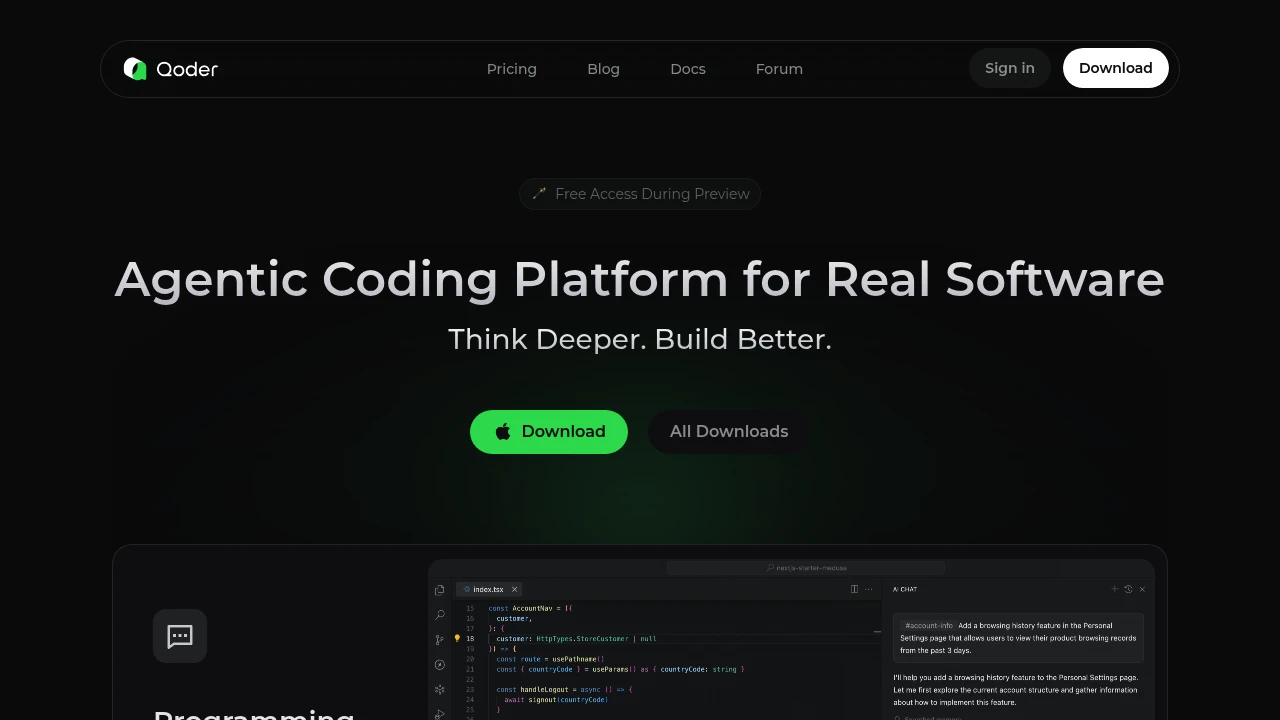
Qoder is an AI-powered coding assistant that helps developers build and deploy applications faster through intelligent code generation. This tool excels at understanding entire codebases and breaking down complex coding tasks into manageable parts. It targets developers who want to speed up their workflow with AI assistance.
Key Highlights
- Generates and edits code across multiple files; changes require review and testing
- Understands complete project architecture and codebases
- Auto-documentation feature saves time and keeps teams aligned
- Smooth and intuitive interface for coding tasks
- Breaks complex problems into simpler, actionable steps
- Helps developers learn new codebases quickly
What Makes It Different
Qoder stands out by focusing on understanding entire project structures rather than just individual code snippets. Its ability to generate code changes across multiple files sets it apart from basic code completion tools. The auto-documentation feature helps maintain team alignment without extra effort.
Features & Capabilities
Qoder offers comprehensive codebase analysis and intelligent code generation. The tool can write code across multiple programming languages and file types while maintaining project consistency. It provides helpful guidance for complex coding tasks and automatically generates documentation. The AI assistant can quickly analyze existing codebases to help developers get up to speed on new projects.
User Ratings and Testimonials
Qoder demonstrates repository-aware coding and multi-file changes. Assess it using your own codebase and development checks. Inspect generated edits, review dependencies and run relevant tests before accepting a result. A working example in one repository does not guarantee correctness in another.
Pricing & Value
Qoder offers a Free plan and credit-limited paid plans: Pro at $20/month, Pro+ at $60/month and Ultra at $200/month. Eligible new users get a 14-day Pro trial with 300 credits.
The main value of Qoder is its ability to help developers build and deploy applications quickly with AI-powered code generation.
Similar proprietary alternatives:

 bisibility — Free beta: Track your website’s keywords, Google rankings, Search Console insights, and share of voice.


