
Consensus

Consensus helps researchers, students, and clinicians search and analyze peer-reviewed literature with cited AI.
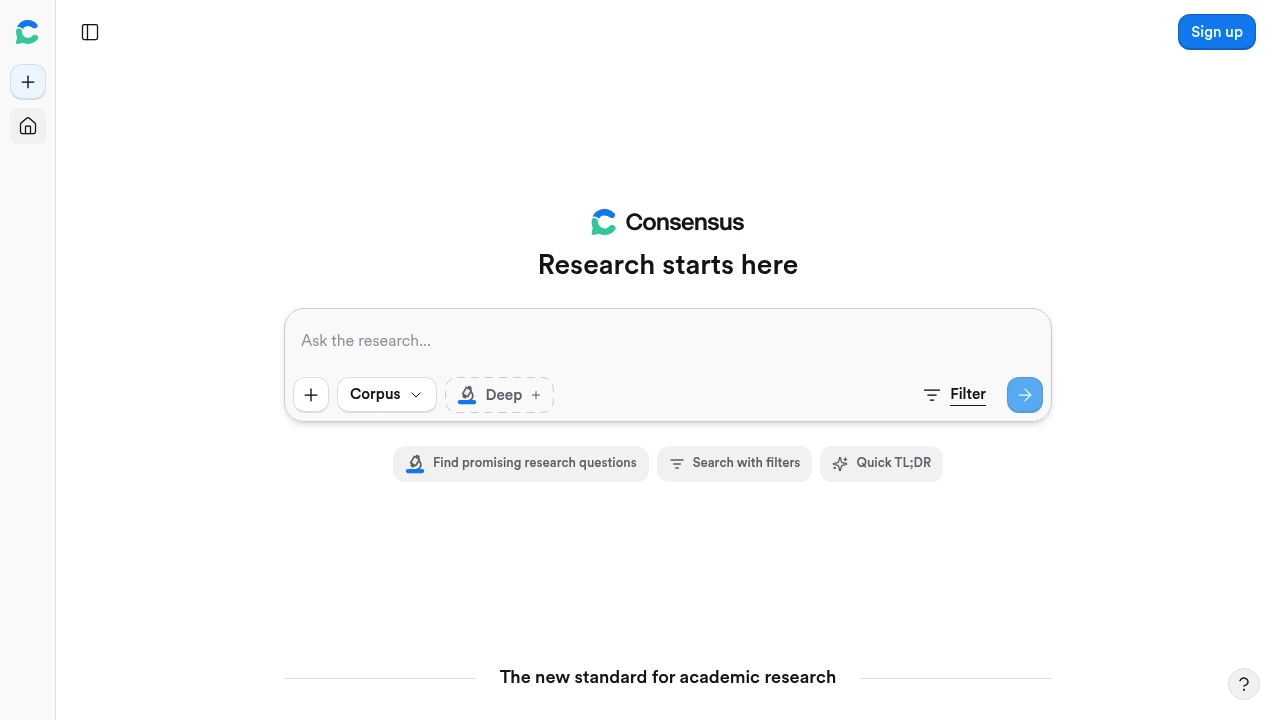
Consensus is an AI academic search engine for peer-reviewed literature. It is built for researchers, students, clinicians, and library users who need to find papers, compare evidence, and review the state of a topic with cited AI analysis.
Key Highlights
- Searches and analyzes 250M+ research papers, including licensed full text from leading publishers
- Deep Search expands search terms, checks conflicting arguments, and explores the citation graph
- Medical mode focuses on about 50,000 clinical guidelines and 8M articles from top medical journals
- Natural language filters handle dates, populations, study designs, sample size, and similar constraints
- Consensus Meter shows agreement or disagreement for clear yes-or-no research questions
What Makes It Different
Consensus starts from academic search rather than general chat. The homepage centers peer-reviewed literature, transparent cited analysis, and workflows for finding consensus, drafting reports, and building comparison tables.
The more advanced layer is Deep Search. It builds a broader strategy, expands key terms, identifies conflicts, and follows citations so a literature review starts from an evidence map, not a single answer.
Features & Capabilities
You can ask a research question in plain language, inspect papers, and use cited AI responses to analyze results. Filters can be written into the prompt, such as large human studies, controlled studies, or work from a specific timeframe.
For clinical work, Medical mode narrows the corpus to guidelines and major journal articles. For heavier research, Deep reviews are designed for literature review tasks that need term expansion, disagreement checks, and citation exploration.
User Ratings and Testimonials
Consensus does not publish an independent average rating. The homepage says over 170 university libraries partner with Consensus, and pricing-page quotes praise peer-reviewed sources, study-design summaries, and relevant papers. The visible limitation is access: Free includes capped AI analysis, while frequent Deep reviews require paid plans.
Pricing & Value
- Free: $0/month, basic paper search, 15 Pro messages per month, and up to 3 Deep reviews per month
- Pro: $10/month ($120 annually), unlimited Pro messages, 15 Deep reviews per month, and unlimited access to research tools
- Deep: $45/month ($540 annually), everything in Pro, 200 Deep reviews per month, and unlimited access to research tools
Eligible students, faculty, and US clinicians can claim up to 40% off. Free is useful for testing search quality, while Pro or Deep fits regular cited analysis and review work.


FAQs
It searches peer-reviewed literature and shows cited AI analysis. You still need to read sources and verify fit for your research.
It has a free plan with basic paper search, 15 Pro messages, and up to 3 Deep reviews per month. Paid plans start at $10/month.
It searches peer-reviewed papers and returns cited evidence tools. ChatGPT is a general chatbot and may not use the same academic corpus.
It is used to find, analyze, and compare peer-reviewed research, including literature reviews, medical searches, and evidence checks.
The main limits are plan caps and scope. Free users get limited AI analysis, and results still need source checking before academic or clinical use.

You might also like
 bisibility — Free beta: Track your website’s keywords, Google rankings, Search Console insights, and share of voice.