
hume
Evaluate voice AI with expression measurement, human feedback, simulation tools, and custom research data.
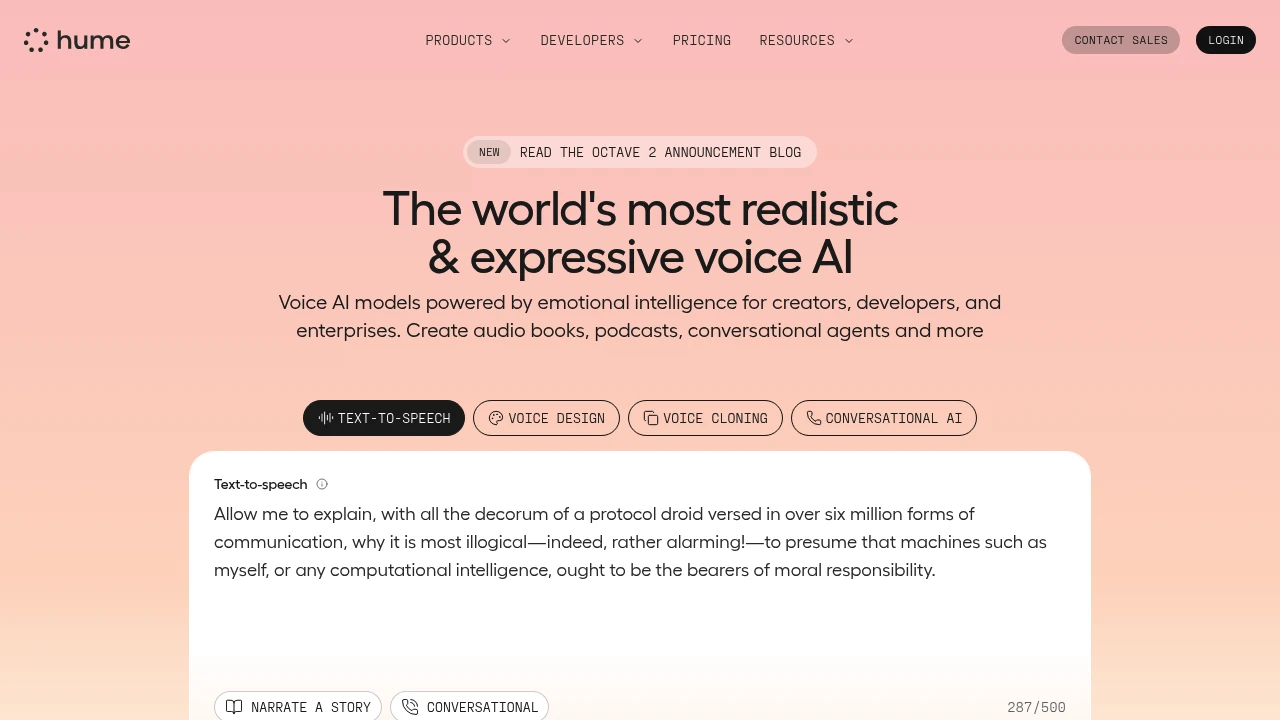
Hume AI provides data and evaluation tools for teams building voice and conversational AI. Its platform combines expression measurement, simulated conversations, and feedback from human participants. The tools help teams assess how a voice system performs in the scenarios they intend to support.
Key Highlights
- Expression Measurement API for voice analysis
- Human Feedback API for participant ratings
- Kairos for conversation simulations
- Custom data collection and research support
- Voice AI benchmarks and leaderboards
What Makes It Different
Hume combines automated measurement with human judgment. A speech system can read words correctly while still sounding wrong for its intended role. Expression analysis, simulations, and participant feedback address different parts of that evaluation rather than reducing quality to one score.
Features & Capabilities
Teams can build test scenarios, simulate agent conversations, and track regressions as models change. The expression tools support real-time measurement and offline analysis of voice data.
Human evaluation returns per-sample scores, free-response feedback, and aggregated results. Custom data collection can be organized around a specific use case and evaluation requirement. Choose test material that represents the speakers and situations your application will encounter.
User Ratings and Testimonials
Hume publishes voice benchmarks based on human judgment, covering recognition, understanding, text-to-speech, and speech-to-speech. A leaderboard compares performance under its own test conditions. Use it alongside tests of your application rather than treating a ranking as a guarantee for every conversation.
Pricing & Value
Research and custom evaluation arrangements are discussed with Hume. The required data, simulations, participant feedback, and integrations affect the scope. Establish which services and usage allowances the agreement includes before estimating ongoing costs. Evaluation tools do not replace review of the results by the team responsible for the voice application.
Product facts
- Pricing
- Not yet verified
- Access
- Not yet verified
- Product status
- Not yet verified


Analytics
Deep dive into AI Tool performance and audience insights.
Growth Trend
DecliningTraffic growth over last 30 days
Traffic & Engagement
Traffic Sources
Top Countries
Tags:

You might also like
 bisibility — Free beta: Track your website’s keywords, Google rankings, Search Console insights, and share of voice.
