Murf Alternatives
A curated collection of the 4 best alternatives to Murf.
The best alternative to Murf is Resemble AI. If that doesn't suit you, we've compiled a ranked list of other Murf alternatives to help you find a suitable replacement. Other interesting alternatives to Murf are: Cartesia, SpeechifyAI and ElevenLabs.
Murf alternatives are mainly AI Voice tools. Browse these if you want a narrower list of alternatives or looking for a specific functionality of Murf.


Resemble AI helps teams clone voices, generate speech, watermark media, and detect deepfakes across audio, image, and video.
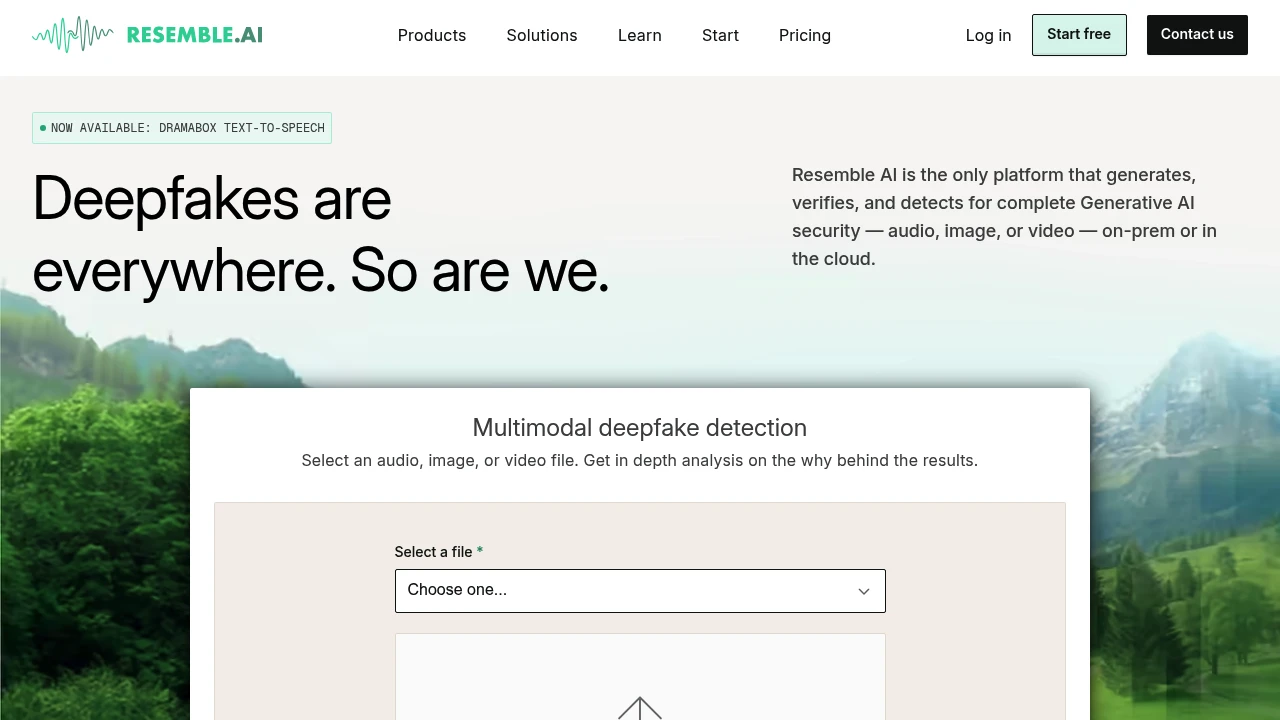
Resemble AI is a secure voice AI and generative media security platform. It combines voice generation, watermarking, and deepfake detection across audio, image, and video. Teams can use it in the cloud or on-prem, with API access included on Flex.
Key Highlights
- Generate text-to-speech, voice agents, voice changing, transcription, enhancement, and audio edits
- Clone voices, design voices, and add rapid or pro voice clones
- Verify media with invisible watermark encode and decode workflows
- Detect audio, image, and video deepfakes, with intelligence analysis available
What Makes It Different
Resemble AI is built around Generate, Verify, and Detect, so synthetic voice creation, media watermarking, and abuse detection live in one platform. That is the main difference from voice-only tools.
The detection scope is broader than audio. The homepage says Resemble AI covers audio, image, and video, with zero-day model coverage tested against 160+ generative AI models. It also lists a Deepfake Detector Chrome extension and Deepfake Incident Database.
Features & Capabilities
For voice work, Resemble AI covers text-to-speech, voice agents, AI voice changing, speech-to-text, audio enhancement, and audio editing. Flex includes voice cloning, full API access, and add-ons for seats, clones, and voice design.
Security workflows include watermark encode, watermark decode, identity search, and deepfake detection for audio, video, and images. Detection can add audio, video, and image intelligence analysis for extra context.
User Ratings and Testimonials
Resemble AI does not publish a third-party rating or quoted customer reviews. The strongest buyer signal is product scope: generation, watermarking, detection, governance, and compliance in one stack. The caution is pricing complexity, because Flex is usage-based and Enterprise requires a quote.
Pricing & Value
- Flex plan: $0 to start, pay per consumption, credits never expire, all voice AI models, voice cloning, deepfake detection, and API access
- Enterprise: Custom pricing, with volume discounts up to 80%, higher concurrency limits, enterprise SLA and SOC 2, SSO or SAML, custom model training, dedicated support, and on-prem deployment
- Flex add-ons: Team seats at $20/month per user, rapid voice clone at $2/month per voice, pro voice clone at $5/month per voice, and voice design at $2/month per voice
- Usage rates: Text-to-speech and AI voice changer at $0.0005 per second, voice agents at $0.001 per second, audio detection and image detection at $0.04 per second, and video detection at $0.07 per second
Resemble AI fits teams that want voice generation and deepfake controls together.
Looking for alternatives to other popular tools? Check out other posts in the alternatives series and flowtools.co, a directory of best AI tools with filters for tags and categories for easy browsing and discovery.

Cartesia is a low-latency voice AI platform with streaming text-to-speech, speech-to-text, and voice agents for developers.
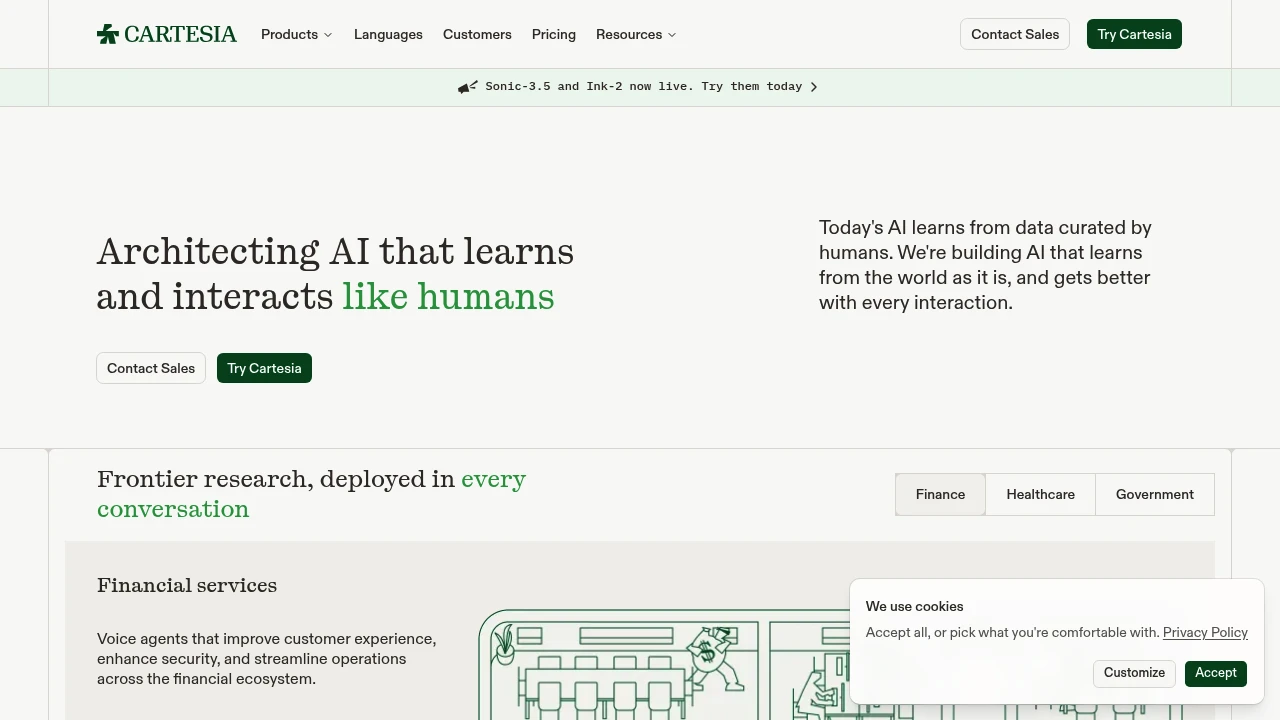
Cartesia is a real-time voice AI platform built around Sonic, its streaming text-to-speech model. It is made for developers and teams building voice agents, live assistants, and interactive apps that need natural speech with very low latency. You reach the models through an API and SDKs, and can run them in the cloud, on-premise, or on-device.
Key Highlights
- Sonic-3.5 streaming text-to-speech with expressive voices in 40+ languages
- Ink-2 speech-to-text for transcription in voice pipelines
- Line voice agents that handle live phone and in-app conversations
- Instant voice cloning from a short audio sample
- Deploy in the cloud, in your own VPC or hardware, or on-device
- SDKs and developer tools for production integration
What Makes It Different
Cartesia's models are built on State Space Models (SSMs), an architecture its founding team helped pioneer at Stanford (including Mamba and H-Nets). SSMs are designed for live, synchronous interactions, so Sonic targets ultra-low time-to-first-audio rather than batch generation. Sonic-3.5 streams its first audio in roughly 90 milliseconds, fast enough for back-and-forth conversation where any delay is noticeable.
The other differentiator is deployment flexibility. The same models and agents run across cloud, on-premise, and on-device, with inference kept in-region for teams with data residency, compliance, or latency needs a single cloud endpoint cannot meet.
Features & Capabilities
The core workflow is API-first: send text to Sonic and stream audio back, send audio to Ink-2 for a transcript, or combine both with the Line agent layer for full voice conversations. Agents can take phone calls on a Cartesia-provided number and connect to your own systems and logic at scale.
Beyond synthesis, it offers instant voice cloning from a short sample, professional voice cloning on higher tiers, a voice changer, and voice localization across languages. Every plan includes unlimited seats and voice slots, with concurrency and agent limits that scale by tier.
User Ratings and Testimonials
Cartesia is best known for speed. Reviewers consistently rank Sonic among the lowest-latency text-to-speech options for real-time agents, and its instant voice cloning from a few seconds of audio draws frequent praise. The common criticism is that for long-form, expressive narration, rivals such as ElevenLabs often rate higher on voice realism, so Cartesia suits live, conversational use more than polished voiceover.
Pricing & Value
- Free: $0/month, 20K credits and $1 of prepaid agents, with text-to-speech and speech-to-text
- Pro: $4/month, 100K credits and $5 prepaid agents, adds a commercial-use license and instant voice cloning
- Startup: $39/month, 1.25M credits and $49 prepaid agents, adds professional voice cloning and organizations
- Scale: $239/month, 8M credits and $299 prepaid agents, adds priority support and high concurrency
- Enterprise: custom pricing with volume rates, custom concurrency, SSO, and compliance agreements
Voice agent calls are billed at $0.06 per minute, plus $0.014 per minute for telephony on a Cartesia number. Yearly billing saves 20%, and the free tier is enough to prototype before you commit.

Developer platform for text-to-speech, voice cloning, and realtime voice agents.
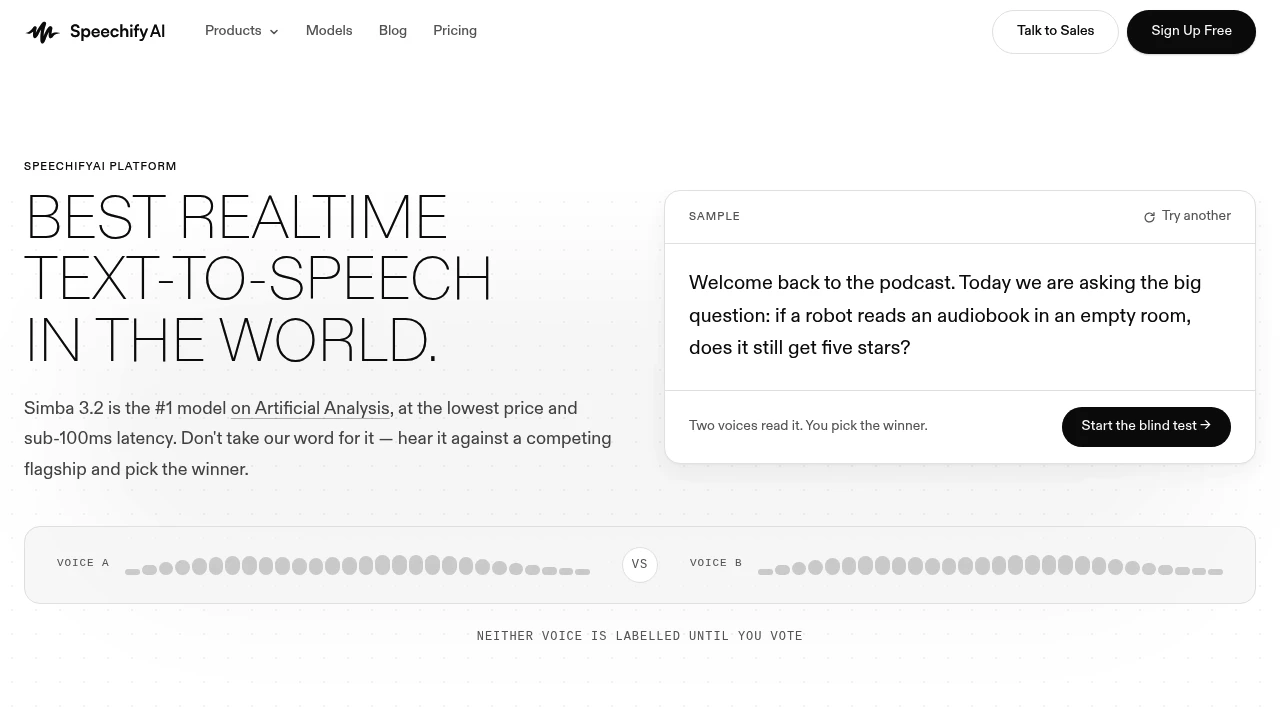
SpeechifyAI is Speechify's developer platform for adding generated speech and conversational voice experiences to applications. Its Build API covers text-to-speech, streaming, SSML, emotion control, speech marks, and voice cloning, while SpeechifyAI Agents provides a managed runtime for realtime voice agents.
Key Highlights
- One API key works across speech generation, voices, and agent endpoints.
- The free plan includes 50,000 text-to-speech characters and 60 voice-agent minutes each month.
- Official Python and TypeScript SDKs are available alongside REST endpoints.
- Developers can start with built-in voices or create a cloned voice from a short audio sample.
What Makes It Different
SpeechifyAI is separate from the consumer Speechify reader. It exposes the voice technology as developer building blocks instead of focusing on reading documents aloud. The same platform combines streaming speech, voice cloning, and full voice agents, so teams can use one account and billing model instead of assembling separate text-to-speech, agent, and orchestration services.
Features & Capabilities
The Build API generates audio from text and supports streaming playback, SSML controls, emotional delivery, multilingual synthesis, and word-level speech marks. Voice cloning creates a reusable voice ID from a 10 to 30 second reference recording. SpeechifyAI Agents adds function calling, knowledge bases, conversation memory, inbound and outbound telephony, webhooks, testing, and an embeddable web component. These capabilities suit product narration, accessibility features, support lines, appointment booking, and other interactive voice workflows.
User Ratings and Testimonials
SpeechifyAI is primarily a developer service, so technical fit is better evaluated with a prototype than with consumer reader reviews. Teams can test latency, pronunciation, emotional range, streaming behavior, and agent tool calls against their own scripts and call flows before choosing a paid plan.
Pricing & Value
- Free: $0 per month with 50,000 text-to-speech characters, 60 voice-agent minutes, and three concurrent calls.
- Starter: $10 per month with 1 million characters, 120 agent minutes, voice cloning, streaming, and SSML.
- Pro: $99 per month with 3 million characters, 1,200 agent minutes, knowledge bases, tool calling, and priority support.
- Scale: $499 per month with 10 million characters, 6,000 agent minutes, higher concurrency, and dedicated support.
Paid usage beyond the included allowances is metered by characters for text-to-speech and by conversation minutes for voice agents. Enterprise pricing is available for custom volume, compliance, and support requirements.
AI voice models and products powering millions of developers, creators, and enterprises. From low-latency conversational agents to the leading AI voice generator for voiceovers and audiobooks.
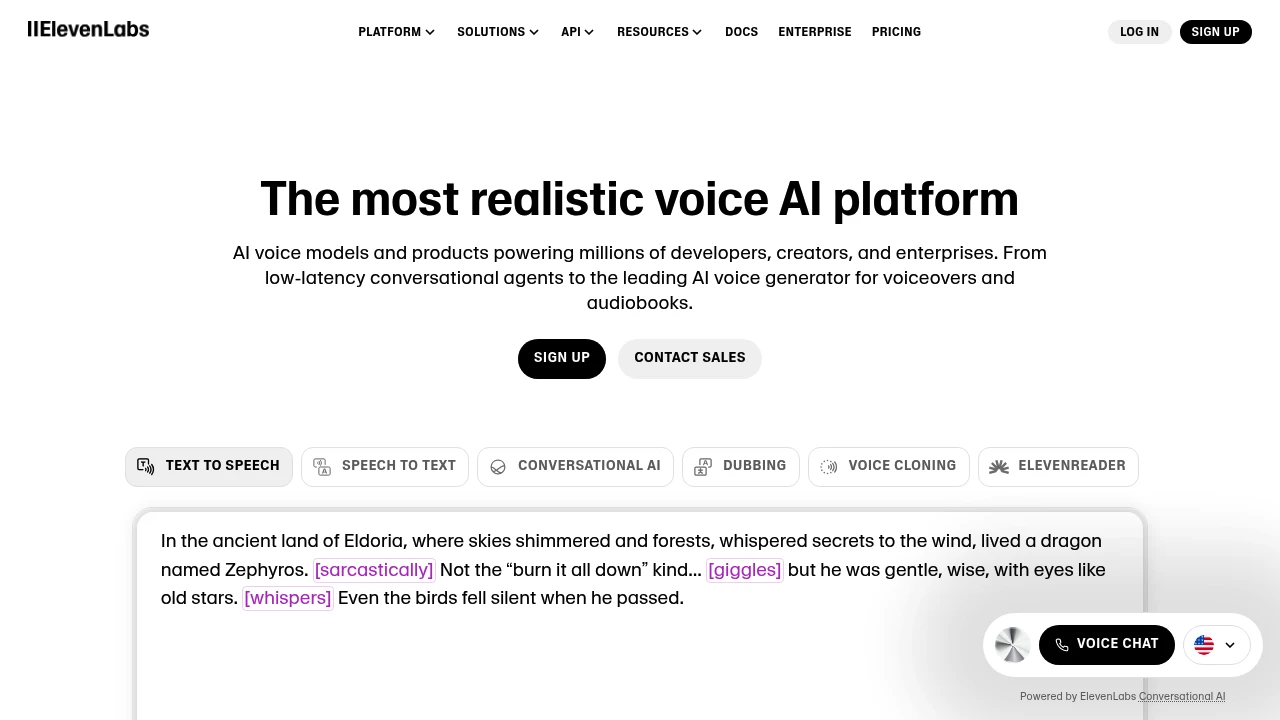
ElevenLabs is an AI-driven text-to-speech (TTS) and voice cloning platform. It creates natural-sounding audio in many languages.
It serves content creators, developers, and businesses that need quality voiceovers. This includes videos, podcasts, audiobooks, and more.
Key Highlights
- Realistic Voices: Generates voices that are highly natural and emotionally expressive.
- Voice Cloning: Create a digital copy of your own voice or any other voice with a short audio sample.
- Multilingual Support: Supports a wide range of languages and accents.
- Easy-to-Use API: Integrate ElevenLabs' voice generation capabilities into your own applications.
What Makes It Different
ElevenLabs stands out for the exceptional quality and realism of its AI-generated voices. ElevenLabs' voices stand out from other TTS tools. They sound natural, not robotic. They capture the nuances of human speech, like intonation, pacing, and emotion. The platform's voice cloning tech makes it easy to create realistic and unique voiceovers.
Features & Capabilities
ElevenLabs offers a range of features for creating and customizing voiceovers. You can choose from a library of pre-made voices or clone your own. The platform allows you to adjust the voice's stability, clarity, and style to match your needs. It also offers a strong API. This helps developers add voice generation to their apps.
User Ratings and Testimonials
ElevenLabs has an average rating of 4.6 out of 5 stars from over 500 reviews on G2.
Users are often impressed by the voice quality and realism. They also find the platform easy to use. Some users say the pricing is high for large-scale use. They also note occasional inconsistencies in the audio output.
Pricing & Value
ElevenLabs offers a free plan with limited characters and features. Paid plans begin at $5 a month. They provide more characters, voice cloning, and API access.
Heavy users may care about pricing. But, the quality of voiceovers adds great value for many uses.
Similar proprietary alternatives:

 bisibility — Free beta: Track your website’s keywords, Google rankings, Search Console insights, and share of voice.


