
Steel
Cloud browser infrastructure with persistent sessions, live debugging, proxies, and an open-source server.
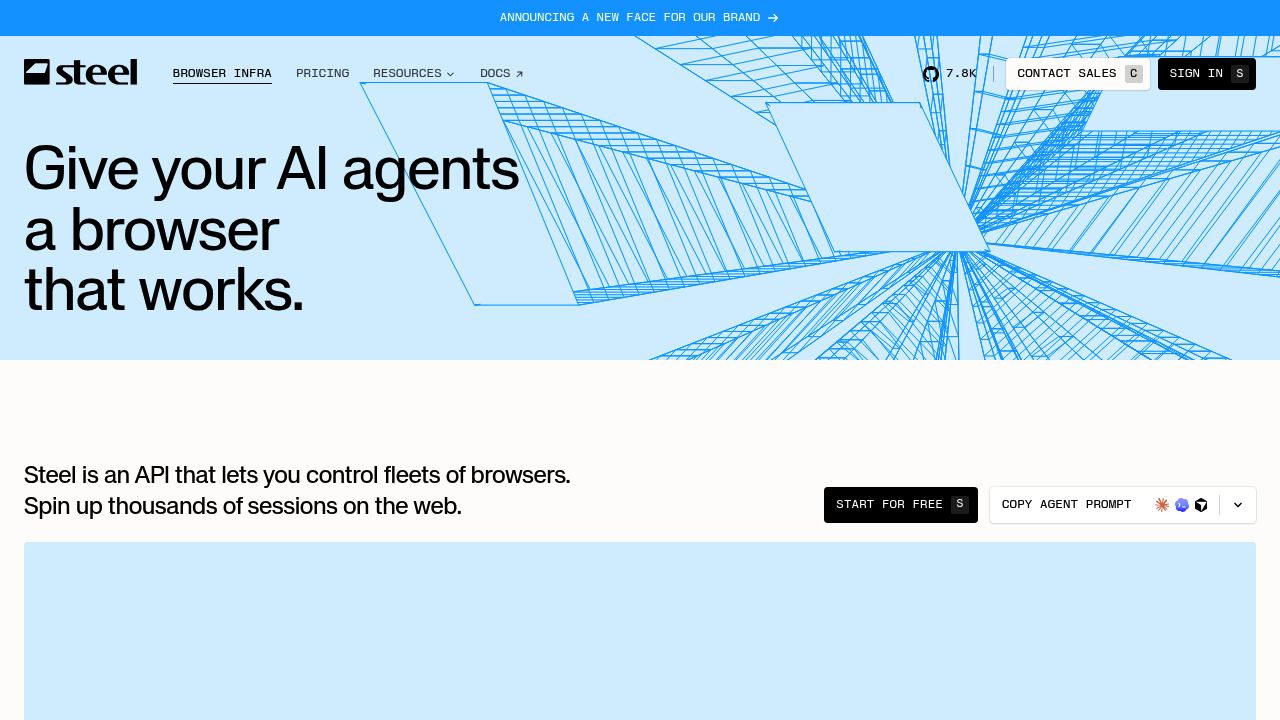
Steel provides browser infrastructure for developers whose AI agents need to navigate websites, fill forms, and collect data. Its API creates cloud browser sessions that existing automation libraries can control. Steel Browser is the open-source server; Steel Cloud supplies a managed service with additional capacity and operational features.
Key Highlights
- Browser sessions connected through a CDP WebSocket
- Playwright, Puppeteer, and Selenium compatibility
- Persistent profiles for cookies and signed-in workflows
- Live session viewing, recordings, and readable traces
- Managed proxies and paid CAPTCHA solving
What Makes It Different
Open-source deployment and managed cloud operation serve different needs. Teams can inspect or host Steel Browser themselves, while the cloud plans meter browser time, proxy bandwidth, and other services. Self-hosting the server does not imply that every managed-cloud feature is included or that infrastructure costs disappear.
Features & Capabilities
Create a session with the API, connect a browser controller, and run the navigation your application requires. Reusing session context lets a later run pick up cookies and state instead of starting from a fresh login. Python and Node.js SDKs support integration into existing agents.
Use the live viewer and recordings to investigate failed clicks or unexpected pages. Proxy and CAPTCHA options support difficult browsing workflows, but session duration and concurrency still depend on the chosen plan. The dedicated Stealth Browser feature is listed on Enterprise.
User Ratings and Testimonials
Steel presents use cases including web scraping, research, and browser-based testing. Assess it with sites your application actually needs: check login persistence, error recovery, recording quality, and costs across repeated runs. An isolated successful session is insufficient evidence of production reliability.
Pricing & Value
- Launch: $0 monthly platform fee plus usage, with $30 in one-time credits.
- Scale: $250/month plus usage, with $100 monthly credits and 100 concurrent sessions.
- Enterprise: custom pricing and capacity.
Launch browser time is $0.10/hour and proxy bandwidth $10/GB; Scale rates are $0.08/hour and $6/GB. CAPTCHA solves are metered separately. The one-time Launch credit expires after 90 days.
FAQs
Steel at steel.dev provides cloud browser sessions for AI agents. Steel Browser is its open-source server; Steel Cloud is the managed service.

You might also like
 bisibility — Free beta: Track your website’s keywords, Google rankings, Search Console insights, and share of voice.

