
AnythingLLM

AnythingLLM is a desktop and self-hosted AI app for private document chat, local models, agents, and team workspaces.
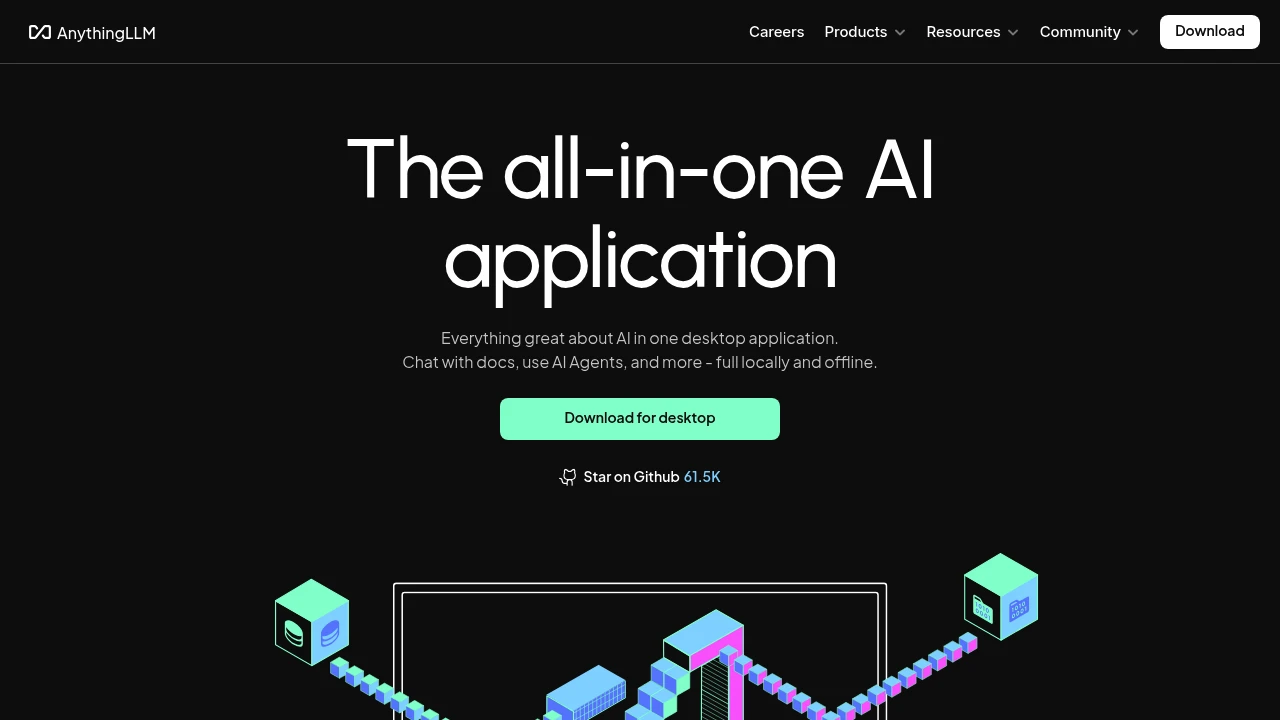
AnythingLLM is an AI application for private document chat, agents, and model choice without building a custom stack. It runs as a free desktop app for local use, with hosted and self-hosted options for teams that need multi-user access, admin controls, and branding.
Key Highlights
- Chat with PDFs, Word documents, CSV files, codebases, and web imports
- Run local models through the built-in LLM provider or connect to OpenAI, Azure, AWS, and other providers
- Use AI agents, agent skills, system prompts, and slash commands
- Keep desktop work local by default, including models, documents, chats, storage, and vector data
- Move to hosted or self-hosted team deployments with multi-user isolation and admin controls
What Makes It Different
AnythingLLM bundles pieces that usually require separate setup: an LLM provider, embedder, vector database, storage, document chat, agents, and a desktop interface. Individuals get a desktop install with no account required. Teams can move to hosted or self-hosted deployments with private instances and tenant isolation.
The other difference is model flexibility. The site positions it as "any LLM, any document, any agent," with support for local and enterprise providers.
Features & Capabilities
The main workflow starts with a workspace: add documents, pick a model, then ask questions or run agent tasks against that context. AnythingLLM supports PDFs, Word documents, CSVs, and codebases, and the Community Hub adds shared agent skills, system prompts, and slash commands.
Desktop is designed for private local use. Basic hosted includes a private instance, RAG, agents, and requires an LLM API key. Pro and Enterprise add larger-team support, user controls, tenant isolation, custom branding, and on-premise options.
User Ratings and Testimonials
AnythingLLM does not publish a third-party rating or user testimonials. The clearest fit is users who care about local document chat, private defaults, open source licensing, and provider choice.
The main tradeoff is plan fit. Hosted Basic is aimed at individuals or teams of less than 5 users and fewer than 100 documents. Larger teams should compare Pro or Enterprise.
Pricing & Value
- Desktop: $0, free to use, open source, MIT licensed, local by default, no account required
- Basic hosted: $50/month, for independent use or teams of less than 5 users and fewer than 100 documents, with a private instance, custom subdomain, RAG, and agents
- Pro hosted: $99/month, for larger teams, with a private instance, RAG, agents, and a 72-hour support SLA
- Enterprise: Contact sales, with on-premise installation, custom support SLA, custom domain, and custom integration support
The free desktop app is the starting point for local RAG and agent workflows. Hosted plans fit teams that want a managed private instance.


FAQs
Mintplex Labs Inc. publishes AnythingLLM, according to the site footer.
Yes. The desktop app is free, open source, and MIT licensed. Hosted cloud plans start at $50/month.
It is a strong fit for private document chat, local models, agents, and self-hosted AI workspaces.
It can use built-in local models or connect to local and cloud LLM providers, including OpenAI, Azure, and AWS.
It combines document chat, agents, local storage, a built-in API, open source licensing, and hosted or self-hosted team options.
You might also like
 bisibility — Free beta: Track your website’s keywords, Google rankings, Search Console insights, and share of voice.
