
OpenHands
OpenHands is an open-source platform for teams running autonomous coding agents locally, in the cloud, or self-hosted.
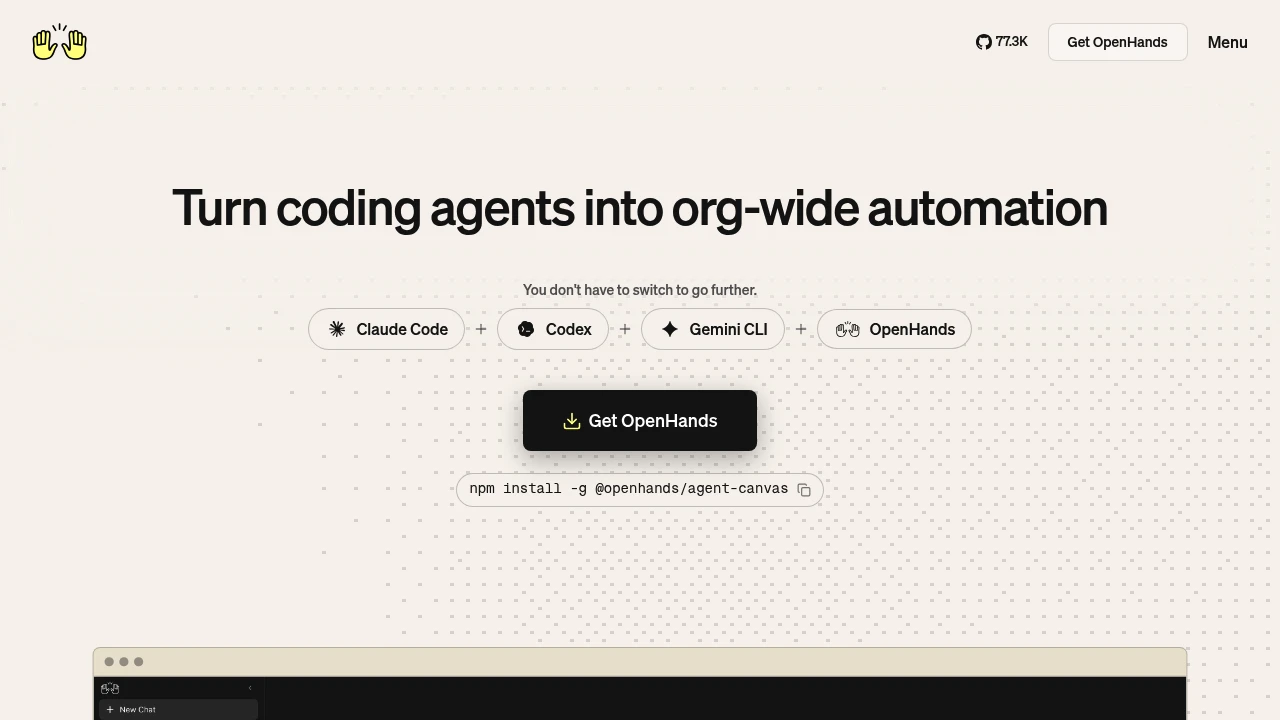
OpenHands is an open-source, model-agnostic platform for coding agents. Developers and engineering teams use it to scan repositories, fix vulnerabilities, review PRs, migrate code, and triage incidents while controlling where code and data run.
Key Highlights
- Run coding agents locally, in the cloud, or self-hosted
- Use a web GUI, Terminal UI, CLI, API, and Git integrations
- Automate repository scans, vulnerability fixes, PR reviews, migrations, and incident triage
- Bring your own LLM key, or use OpenHands model access at cost
- Connect GitHub, GitLab, CI/CD, Slack, Jira, ticketing tools, and PagerDuty
- Add enterprise controls such as RBAC, SSO, audit logs, budgets, and VPC deployment
What Makes It Different
OpenHands is closer to an agent runtime than a code-completion add-on. Agents run in isolated sandboxes on a VM or in the cloud, keep working when your laptop is off, and can be triggered from GitHub, Slack, or PagerDuty.
Because the base is open source, teams can fork the codebase, build an interface, embed the SDK, choose a model provider, and run agents locally, in OpenHands Cloud, or in a VPC.
Features & Capabilities
The free local version includes the OpenHands agent, web-based GUI, Terminal UI, CLI, Git integrations, community support, and model-agnostic setup. Hosted Individual adds cloud access from desktop and mobile, API support, Jira and Slack integrations, BYOK, and optional OpenHands model access billed at cost.
For organizations, Enterprise adds SaaS or self-hosted deployment in a VPC, enterprise SAML/SSO, unlimited users, unlimited concurrent conversations per user, the Large Codebase SDK, priority support, a named customer engineer, and a shared Slack channel.
User Ratings and Testimonials
No average review-site rating is published on its website. Its homepage quotes engineering and AI leaders at Flextract, C3, AMD, Oracle, and Walmart Global Tech. The praise centers on remote autonomous coding agents, model choice, SDK completeness, open-source control, and integrations.
The caveat is plan scope. Open Source and Individual are single-user options, while organization support, RBAC, SSO, centralized billing, Large Codebase SDK access, and priority support sit in Enterprise.
Pricing & Value
- Open Source: $0, local single-user OpenHands with web GUI, Terminal UI, CLI, Git integrations, community support, and model-agnostic setup
- Individual: $0, hosted cloud for one user, 10 daily conversations, API support, Jira and Slack integrations, BYOK, and optional model usage billed at cost
- Enterprise: Custom pricing, SaaS or self-hosted in your VPC, unlimited users, SAML/SSO, Large Codebase SDK, and priority support
The free options are strong for individual experimentation, while Enterprise is the path for teams that need governed cloud or self-hosted agent automation.
FAQs
Yes. OpenHands has a free open-source local version and a free Individual cloud plan. Optional provider model usage is billed at cost.
Install the local app, use the hosted Individual plan, or deploy Enterprise. Agents run through the web GUI, Terminal UI, CLI, API, or integrations.
It runs autonomous coding agents that modify codebases, fix vulnerabilities, review PRs, migrate code, and triage incidents.

You might also like
 bisibility — Free beta: Track your website’s keywords, Google rankings, Search Console insights, and share of voice.

