
Codex
OpenAI Codex helps developers inspect repositories, edit code and run tools through local clients and eligible cloud tasks.
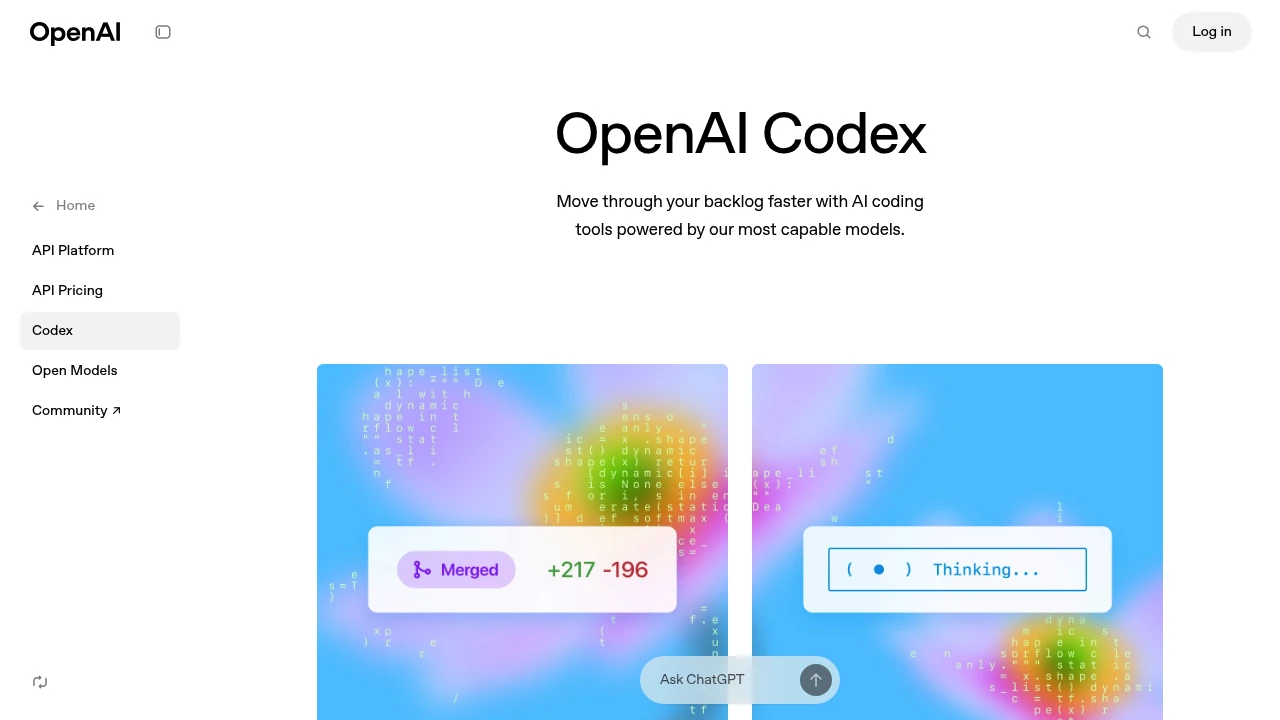
Codex is OpenAI's coding agent for developers who want help writing, reviewing and maintaining software. It can work with a repository, explain code, make edits and run development tools. Local clients and eligible cloud environments provide different ways to carry out a task.
Key Highlights
- Repository work from written instructions
- Code editing, explanation and review
- Commands and tests in the working environment
- CLI and IDE extension workflows
- Cloud tasks for eligible accounts and workspaces
What Makes It Different
Codex works on a development task with project context rather than only returning an isolated code snippet. It can inspect files and use tools while making changes. Its suggestions and test output help a developer review a result, but generated code still needs appropriate checks.
Features & Capabilities
Start in a repository and describe the behavior you want changed. Codex can examine existing implementation, edit files and run available checks. Project instructions, environment permissions and installed tools shape what it can do. Review the diff and any remaining failures before accepting changes.
The CLI and IDE extension provide local development workflows. Codex Cloud runs tasks in managed environments for eligible accounts, subject to workspace settings. Cloud work can continue while a computer is asleep, whereas local workflows depend on the device running the task.
User Ratings and Testimonials
OpenAI shows coding workflows and examples for Codex. Evaluate it with a representative task and your repository's checks. A successful demonstration does not establish correctness for a different codebase, dependency set or deployment environment.
Pricing & Value
- ChatGPT plans: Codex is included across plans, including Free and Go, with usage limits
- Codex Cloud: requires an eligible paid account and enabled workspace access
- API access: separate billing applies when using an API key
Allowances vary by plan, task complexity, tools and model. Check account eligibility and usage before starting long-running tasks.
Product facts
- Pricing
- Not yet verified
- Access
- Not yet verified
- Product status
- Not yet verified


Analytics
Deep dive into AI Tool performance and audience insights.
Growth Trend
DecliningTraffic growth over last 30 days
Traffic & Engagement
Traffic Sources
Top Countries
FAQs
Codex is included with ChatGPT plans, including Free and Go, with usage limits. Cloud access requires an eligible paid plan.
OpenAI Codex is used to write and edit code, answer code questions, fix bugs, run tests, and draft pull requests.
Tags:
You might also like

 bisibility — Free beta: Track your website’s keywords, Google rankings, Search Console insights, and share of voice.


