InVideo Alternatives
A curated collection of the 8 best alternatives to InVideo.
The best alternative to InVideo is OpusClip. If that doesn't suit you, we've compiled a ranked list of other InVideo alternatives to help you find a suitable replacement. Other interesting alternatives to InVideo are: Captions, Luma, Pika and Synthesia.
InVideo alternatives are mainly AI Video Tools tools but may also be AI Image Generation tools. Browse these if you want a narrower list of alternatives or looking for a specific functionality of InVideo.


OpusClip helps creators and teams turn long videos into short clips with AI clipping, captions, reframing, and posting.
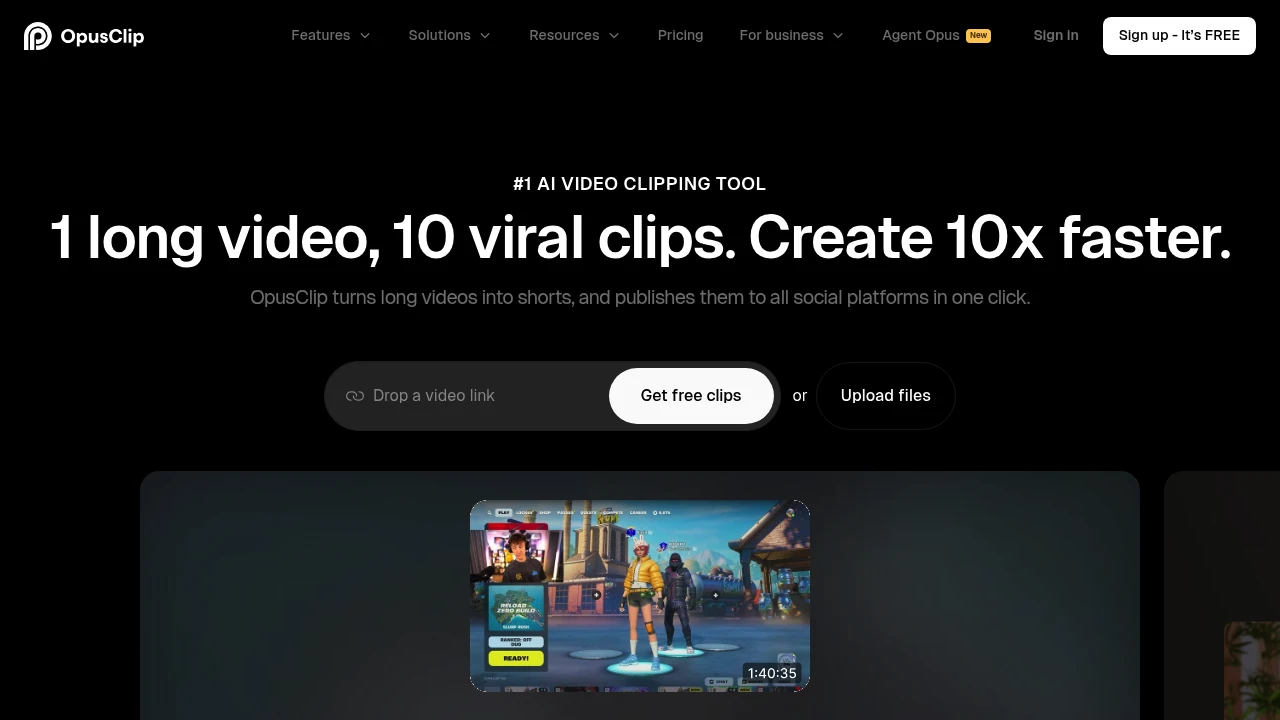
OpusClip is an AI video repurposing tool that turns long videos into short clips for platforms like TikTok, YouTube Shorts, and Instagram Reels. It is built for creators, podcasters, marketers, agencies, and teams that want clipping, captions, reframing, editing, and posting together.
Key Highlights
- AI clipping finds moments in long videos and adds a virality score.
- ClipAnything supports podcasts, interviews, vlogs, gaming, sports, and low-dialogue videos.
- AI captions add animated captions in 20+ languages.
- AI reframe resizes clips and can keep moving subjects centered.
- Publishing tools support downloads, auto posting, scheduling, and Pro exports.
What Makes It Different
OpusClip is focused on the full path from long-form source to publishable short. Its homepage highlights ClipAnything, which analyzes visual, audio, and sentiment cues across video genres, and ReframeAnything, which resizes video while tracking subjects. You can still edit the clip, but the product is built around finding moments, adding captions, reframing for social formats, and publishing the result.
Features & Capabilities
The core workflow starts with a video upload or link. The Pro plan supports imports from YouTube, Google Drive, Vimeo, Zoom, Twitch, Facebook, LinkedIn, Twitter, Loom, Riverside, StreamYard, and more. OpusClip can set clip length, add hooks, generate captions, remove filler words, and create social titles, descriptions, and hashtags.
The editor adds control when the first pass is not enough. Paid plans unlock watermark-free exports, brand templates, custom fonts, AI B-roll, voice-over, speech enhancement, multiple aspect ratios, social connections, team workspaces, and API access.
User Ratings and Testimonials
The saved product pages do not show an independent average rating. OpusClip publishes testimonials that focus on faster clipping, frequent posting, and short-form reach. Plan caveats: Free has a watermark and no editing; custom integrations, SSO, and priority support sit on Business.
Pricing & Value
- Free: $0/month, 60 credits/month, 1080p clips, auto reframe, AI captions, watermark, no editing, and a 3-day export window.
- Starter: $15/month, 150 credits/month, virality score, captions, auto posting or download, one brand template, filler and silence removal, and no watermark.
- Pro: $29/month, or $14.50/month yearly ($174/year), with 3,600 yearly credits, 2 seats, AI B-roll, 10+ input sources, multiple ratios, scheduler, custom fonts, speech enhancement, and limited API.
- Business: Custom pricing for priority processing, custom credits and seats, dedicated storage, API and custom integrations, MSA, enterprise security, and priority support.
Free is useful for testing clip quality; Starter and Pro are the practical entry points for watermark-free publishing and higher-volume workflows.
Looking for alternatives to other popular tools? Check out other posts in the alternatives series and flowtools.co, a directory of best AI tools with filters for tags and categories for easy browsing and discovery.

Captions is an AI video editor for creators who make talking videos, AI actors, captions, and translations.
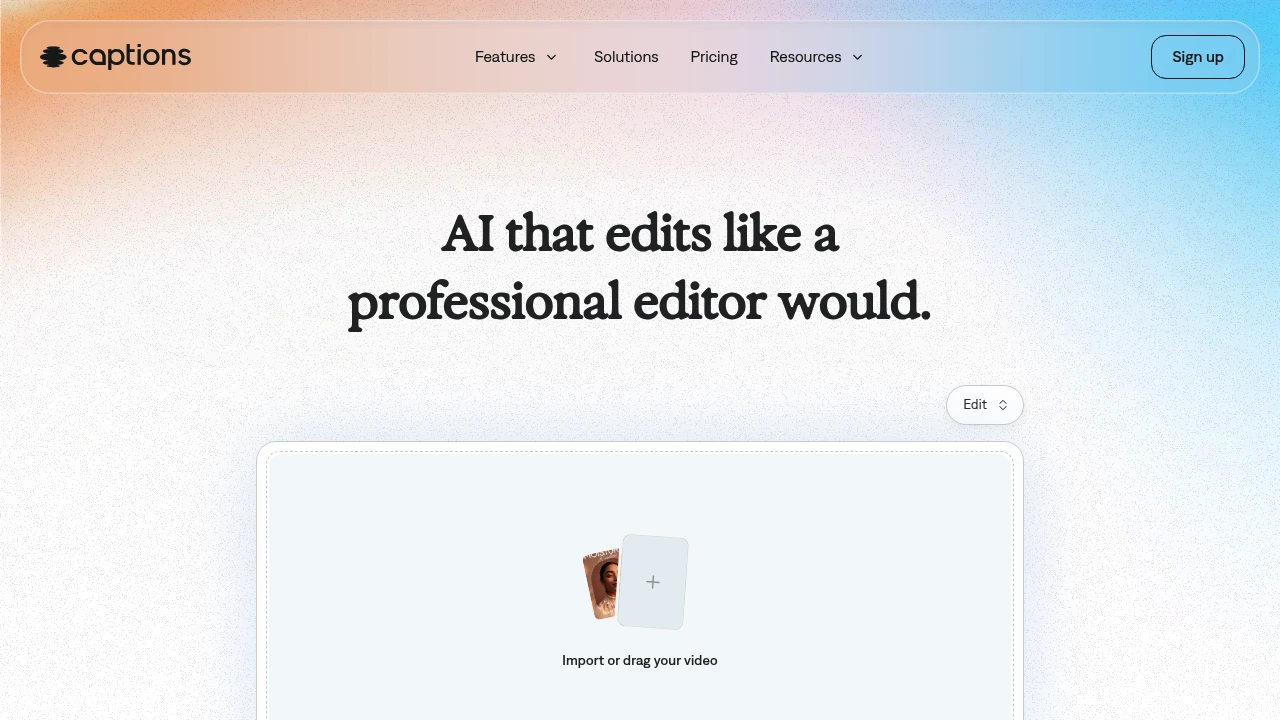
Captions is an AI video generator and editor for creators and teams making finished talking-head videos without a full edit timeline. Upload footage, choose a style, and the app can cut scenes, add B-roll, captions, and music. AI actors and custom avatars help produce new takes without recording every version.
Key Highlights
- Turns raw footage into a finished video with AI Edit
- Adds automatic captions
- Creates custom AI actors and digital twins
- Supports translation into 30+ languages
- Includes chat-based editing, eye contact correction, denoise, and pause trimming
What Makes It Different
Captions is built around one-tap production, not manual clip-by-clip editing. Its homepage says the AI reads the story in the footage, then tailors cuts and style choices.
The same workspace can edit uploaded footage, add captions and translations, create B-roll, generate music or sound effects, and reuse an AI actor across multiple videos.
Features & Capabilities
The main workflow starts with importing a video, choosing a style, and creating the edited version. AI Edit can cut scenes, overlay B-roll, and apply a style, while the chat-based editor handles plain-language change requests.
For talking-head content, Captions includes automatic captions, translation, eye contact correction, denoise, pause trimming, music, sound effects, and caption templates. Its avatar tools can generate talking videos from selfies, create custom AI actors, and change outfits, backgrounds, or product placement.
User Ratings and Testimonials
Captions does not publish third-party review scores or quoted customer testimonials. Captions does publish usage claims on its homepage: 100K+ daily users, 20M creators and businesses, and 3M+ monthly videos. Visible limits are that the free plan has no AI usage credits and only one caption template, while heavier generation work requires a paid tier.
Pricing & Value
- Free: $0, with limited tools, no AI usage credits, and one caption template
- Max: $24.99/mo, with 500 credits per month, AI Edit styles, AI actors, chat-based editing, and generative assets
- Scale: $69.99/mo, with 1,400 credits per month and Captions' most sophisticated generative AI models
- Scale 2x: $139.99/mo, with 2,800 credits per month for more output
- Scale 4x: $279.99/mo, with 5,600 credits per month for larger production volume
- Enterprise: Custom pricing, with bulk credit discounts, custom seats, account management, training data exclusion, onboarding, support, and early feature access
The pricing page says all listed prices are in USD and reflect iOS plans only, so buyers should confirm platform-specific billing before upgrading.

Luma is an AI platform for creative teams that generates and edits video, image, and audio from a prompt using agents.

Luma is an AI platform for creative work that generates and transforms media across video, image, audio, and text from a prompt. It is built for creative teams, filmmakers, and marketers who want to move from concept to delivery in one tool. Agents coordinate the work, while the Dream Machine app and Ray video models handle generation.
Key Highlights
- Generate video, image, audio, and text from a single prompt
- Ray 3.2 video model with frame-level direction and cinematic control
- Agents that coordinate multi-step creative tasks across media
- Many third-party models (Veo, Kling, Seedance, Nano Banana) alongside Luma's own
- Image-to-video, video-to-video, and reframe workflows
- Commercial use rights on paid plans
What Makes It Different
Luma frames itself around agents rather than single-shot generation. Instead of asking one model for one clip, you describe a goal (a pitch deck, hero product shots, a cinematic cut) and agents generate and coordinate the media to deliver it. The Ray 3.2 model adds control over continuity and lets you direct individual frames, which matters for longer sequences.
Features & Capabilities
The core workflow runs through Dream Machine: type a prompt, generate, then refine with image-to-video, video-to-video, or reframe actions. Luma also exposes a wide model catalog, so you can route a job to its own Ray models or to third-party options like Veo 3.1, Kling, Seedance, and Nano Banana, each priced per generation in credits.
Beyond video, it covers image generation (Uni-1, GPT Image, Seedream) and audio via ElevenLabs models for speech, sound effects, and music. Background removal and reframing keep a project inside one tool.
User Ratings and Testimonials
Luma's Dream Machine is widely regarded as one of the stronger AI video generators for cinematic motion and image-to-video quality. Users praise the realism and the speed of iterating on shots. Common criticisms: the credit system burns through quickly at higher resolutions, the free tier is tight (daily credits, 720p, watermarked, no audio), and fine control over longer scenes still takes effort.
Pricing & Value
- Free: $0, with a small pool of daily credits, 720p output, and a watermark
- Plus: $30/month ($300 billed yearly) for Luma and third-party models, guest edit access, and commercial use
- Pro: $90/month ($900 billed yearly) for everything in Plus plus 4x usage with Luma Agents
- Ultra: $300/month ($3,000 billed yearly) for everything in Pro plus 15x usage with Luma Agents
- Team and Enterprise: custom pricing with shared credits, SSO, analytics, and fine-tuning
The free tier is enough to judge quality, while Plus is the entry point for commercial work. Heavy video output is metered in credits, so cost scales with resolution and model choice.

Pika is an idea-to-video platform for short, playful AI clips: animate a photo, apply effects like Pikaswaps, or build with its video agent.
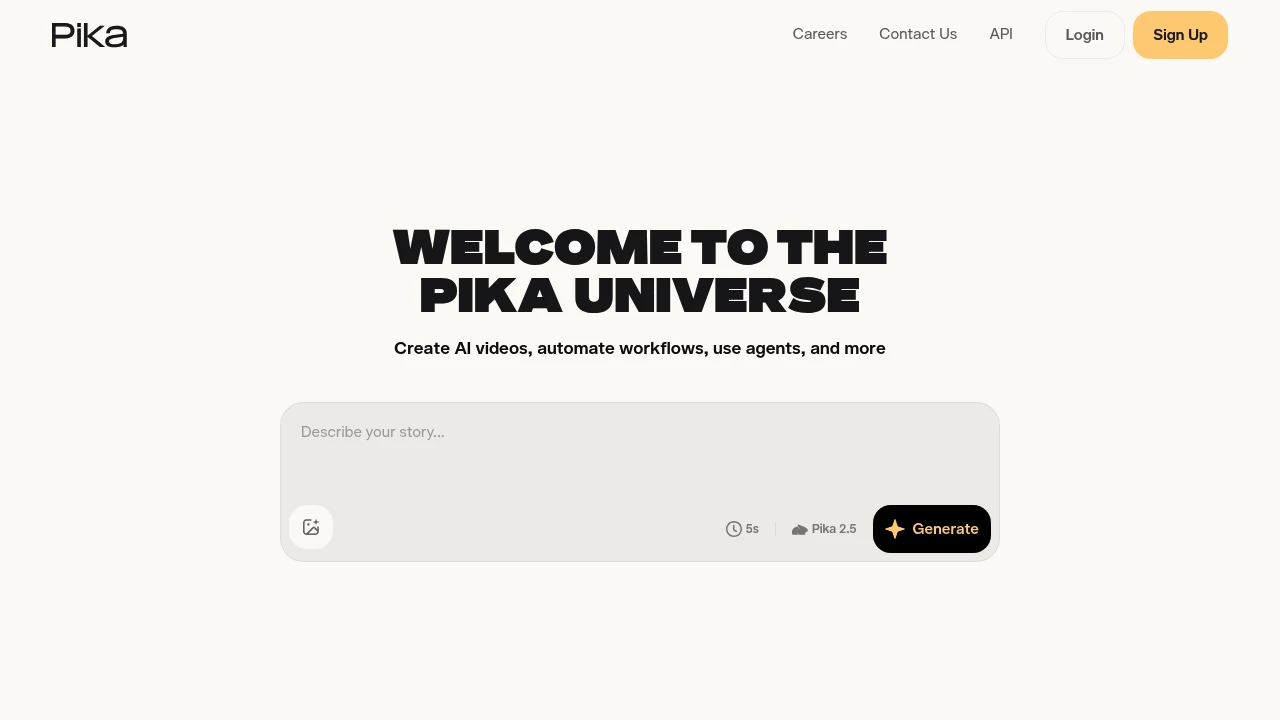
Pika is an AI video generator focused on short, creative, share-ready clips. It is built for social creators and casual users who want fast, playful results rather than long cinematic shots. You can generate video from a text prompt, animate a still photo, or use Pika's signature effects, and a mobile app makes it easy to create on the go.
Key Highlights
- Text-to-video and image-to-video with the Pika 2.5 model
- Signature effects: Pikaffects, Pikaswaps, and Pikascenes
- Animate any photo into a short, surprising clip
- Pika Agent and MCP support for automated creative workflows
- Fast generations tuned for short-form social content
- Web platform plus an official mobile app
What Makes It Different
Pika leans into fun and speed rather than maximum realism. Effects like "squish," "melt," and "cake-ify" and one-tap photo-to-video clips made it a viral favorite, and it renders quickly, which suits rapid iteration for social trends.
Features & Capabilities
You start from a prompt or an image, choose an effect or scene, and Pika produces a short clip you can refine and download. Pikascenes and Pikaswaps let you compose and swap elements within a shot for more control.
Beyond manual creation, Pika offers an agent and MCP integration so creative steps can be automated or triggered from other tools, and the mobile app brings the effects to your phone.
User Ratings and Testimonials
Users love Pika for speed, accessibility, and the novelty of its effects, which are ideal for short-form content. Critics note that clip length and fine control trail tools like Sora, Veo, and Kling, and that it is better for playful clips than polished, narrative video.
Pricing & Value
- Basic: free, 80 monthly credits, Pika 2.5 (480p), watermark-free downloads, and commercial use
- Standard: from ~$8/month, 700 monthly credits and more editing features
- Pro / Fancy: higher tiers for more credits, higher resolution, and faster generation
Pika is strong value for creators who want quick, eye-catching social clips rather than long-form cinematic output.

Synthesia turns scripts into studio-quality videos with AI avatars and voiceovers in 140+ languages, with no camera, mic, or film crew needed.
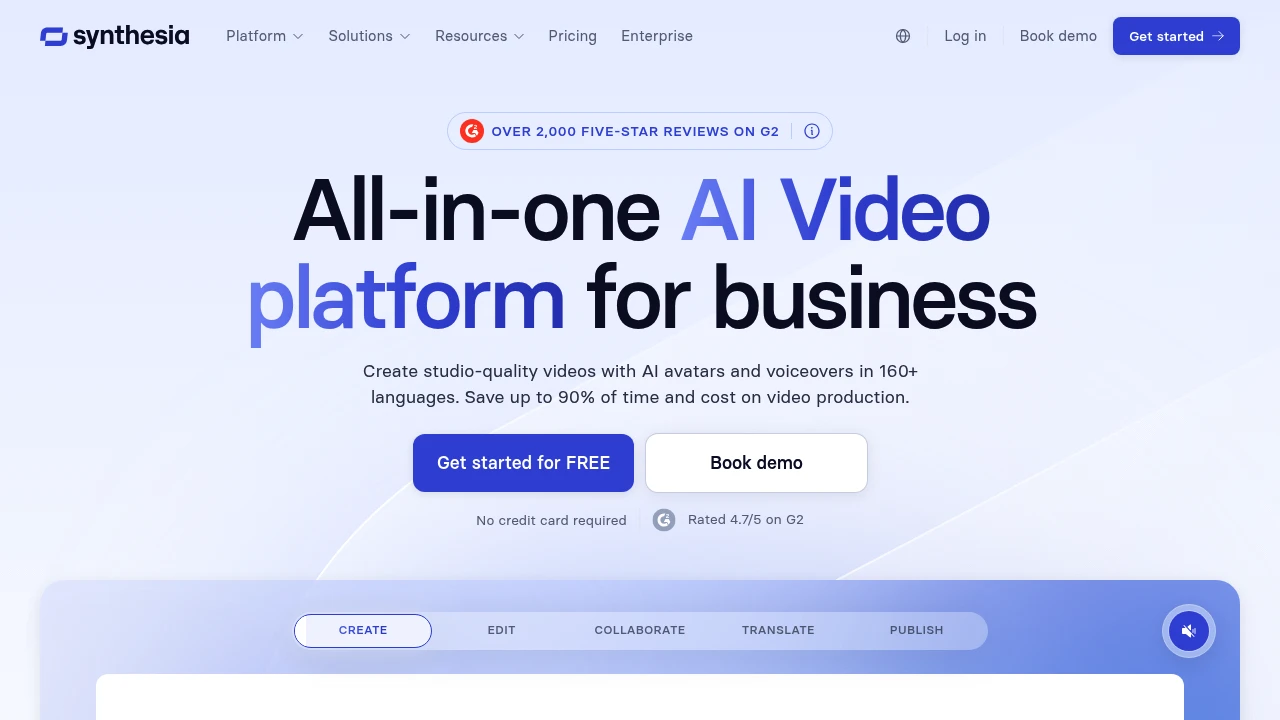
Synthesia is an AI video platform that creates studio-quality videos featuring lifelike AI avatars and voiceovers from a written script. It is built for business use (training, onboarding, product, and marketing videos) where teams need to produce and update content at scale without filming. You type or paste a script, pick an avatar and language, and Synthesia generates the video.
Key Highlights
- 230+ stock AI avatars plus custom and personal avatars
- Voiceovers and on-screen text in 140+ languages
- Script-to-video editor with templates and brand kits
- Easy updates, edit the script and re-render, no reshoot
- Collaboration, review, and LMS/SCORM export
- Enterprise-grade security and controls
What Makes It Different
Synthesia is the category leader for enterprise avatar video, used by a large share of the Fortune 100. Its strengths are avatar realism, the breadth of languages, and how cheap it makes updating content: changing a sentence is a script edit, not a new shoot.
Features & Capabilities
You build videos in a slide-like editor: choose an avatar, write the script, add media, captions, and branding, then generate. Localization is a core workflow: one video can be produced in dozens of languages from the same source.
For teams, Synthesia adds shared workspaces, review and approval, brand controls, and export into learning platforms, making it practical for large content libraries.
User Ratings and Testimonials
With over 2,000 five-star reviews on G2, users consistently praise how easy it is to produce professional videos and to localize them. Common criticisms are that avatars, while strong, can still feel slightly synthetic for emotional content, and that higher-volume plans get expensive.
Pricing & Value
- Free: a few minutes of video per month to try it
- Starter: around $18/month for regular creators
- Creator: around $64/month for more minutes and avatars
- Enterprise: custom pricing with custom avatars and security
The free plan is enough to test quality, while paid tiers pay off fastest for teams localizing or frequently updating training content.

With Gen-4, you are now able to precisely generate consistent characters, locations and objects across scenes. Simply set your look and feel and the model will maintain coherent world environments while preserving the distinctive style, mood and cinematographic elements of each frame. Then, regenerate those elements from multiple perspectives and positions within your scenes.
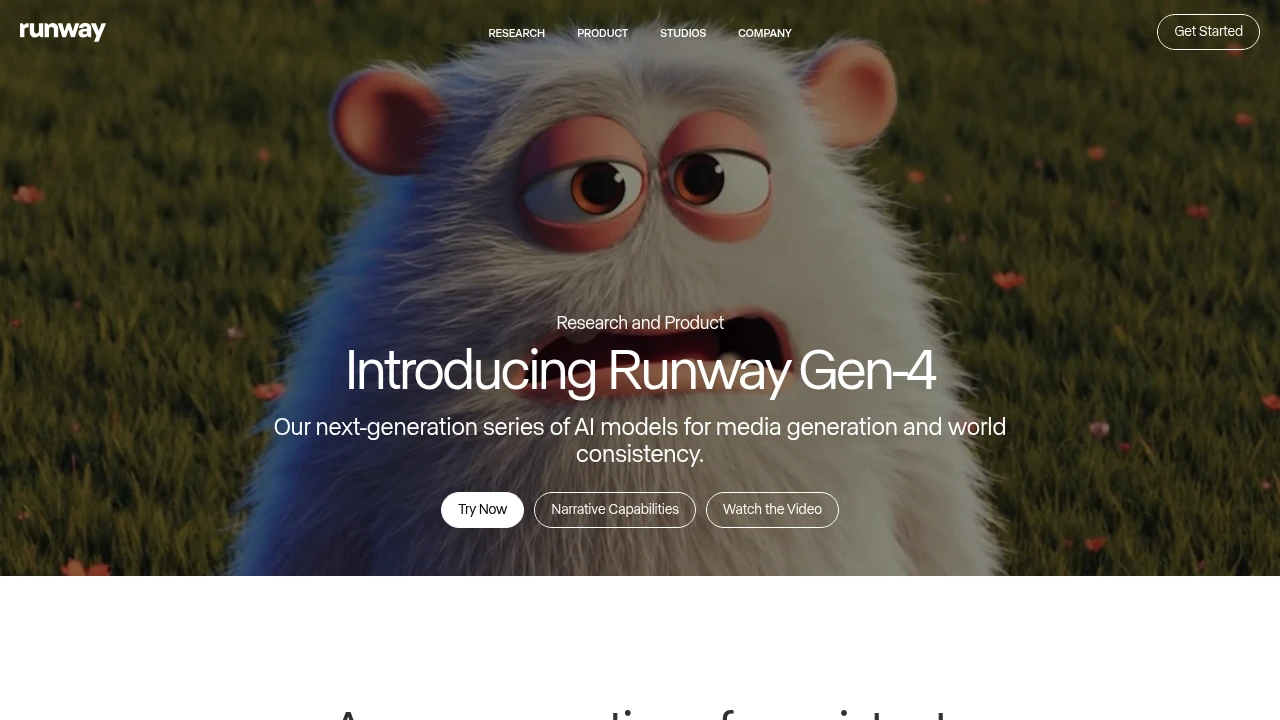
Runway is an AI video tool for creators, marketers, and teams.
Gen-4 brings higher quality and more coherent motion.
Runway Aleph adds a new way to edit, transform, and generate video from a single input clip.
Key Highlights
- Gen-4 quality and coherence improvements
- Aleph in-context edits: add, remove, and transform objects; change style and lighting; create new angles from one video
- Gen-4 Turbo image-to-video
- Generative image tools
- Custom voices on Pro plan
- Watermark removal on paid plans
- Unlimited generations in Explore mode on the Unlimited plan
- Service access limits for non-paying users during high demand
What Makes It Different
Runway blends generation and precise video editing in one place. Aleph works from a single input video and can reshape scenes, objects, and style, even switch angles.
Features & Capabilities
Create short videos from images with Gen-4 Turbo. Transform existing footage with Aleph to add or remove objects and restyle lighting and look. Utilize generative image tools and custom voices to refine your edits. Paid plans remove watermarks and increase storage.
User Ratings and Testimonials
Runway has an average rating of 3.8 out of 5 stars, based on 35 reviews, on Product Hunt.
Users praise the coherence and quality gains in Gen-4. Many say it offers a better experience than earlier versions and would recommend it. Some users are excited to try the new features.
Pricing & Value
- Free: Includes 125 one-time credits, Gen-4 Turbo image-to-video, and generative image tools.
- Standard: $15/month for 625 monthly credits, all video models, and watermark removal.
- Pro: $35/month for 2250 monthly credits, custom voices, and 500GB storage.
- Unlimited: $95/month with 2250 credits plus unlimited generations in Explore mode.
- Enterprise: Custom pricing with single sign-on, advanced security, and priority support.
Credits refresh monthly on paid plans. You can purchase extra credits.
The free tier offers 125 credits (equivalent to 25 seconds of Gen-4 Turbo) to test Runway's video generation capabilities before committing to a paid plan.
Looking for alternatives to other popular tools? Check out other posts in the alternatives series and flowtools.co, a directory of best AI tools with filters for tags and categories for easy browsing and discovery.

Direct your AI co-editor to turn your vision into video, or do it yourself with intuitive editing tools. With Descript, making video is as easy as typing.
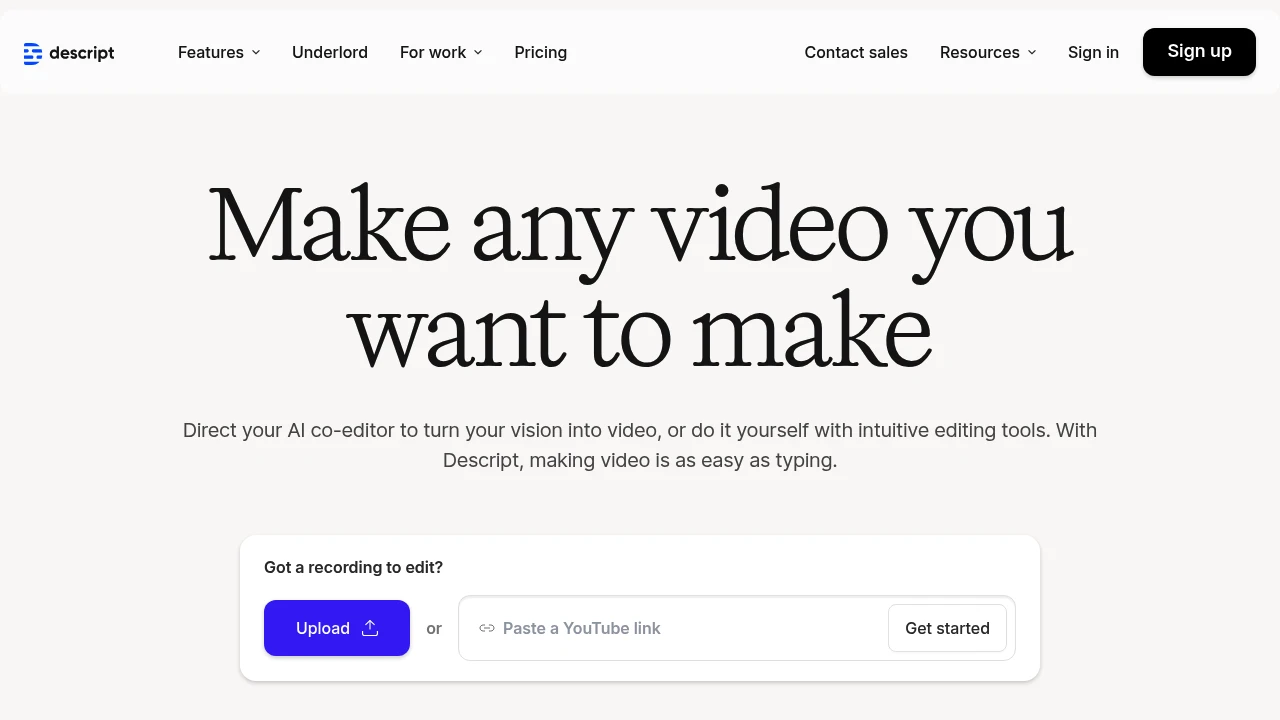
Descript transforms video and podcast editing by letting you edit media files like text documents. This AI-powered platform combines transcription, editing, and collaboration tools in one workspace. Content creators and podcasters use it to cut editing time by up to 90%.
Key Highlights
- Text-based video editing - edit by cutting and pasting transcript text
- Automatic filler word removal for cleaner audio
- AI voice cloning and overdub features
- Real-time collaboration tools for teams
- 4K video export capabilities
- Multi-track audio editing
- Screen recording built-in
- Automatic transcription in 22+ languages
What Makes It Different
Descript breaks the traditional video editing model. Instead of timeline-based editing, you edit videos by editing the transcript text. Cut a sentence from the transcript and the video cuts automatically. This approach makes video editing accessible to non-editors and speeds up the process for professionals.
Features & Capabilities
The platform handles the full content creation workflow. Record or upload your media, and Descript generates accurate transcripts. Edit by deleting text, rearranging sentences, or adding new content. The AI voice feature lets you create new audio by typing text.
Teams can collaborate in real-time with comments and suggestions. The platform exports to all major formats and integrates with popular tools like Slack and Zapier. Advanced features include green screen removal, automatic scene detection, and batch processing.
User Ratings and Testimonials
Descript has an average rating of 4.4 out of 5 stars from 137 reviews on Product Hunt.
Users praise the text-based editing feature for saving hours of work. Podcast creators highlight the filler word removal as a standout feature. Many report editing speeds 10 times faster than traditional tools. The transcript accuracy and AI voice quality receive positive feedback for sounding natural.
Some users report occasional slowness and bugs. Price concerns exist for smaller creators. Linux support remains limited, and some Mac users experience performance issues.
Pricing & Value
Descript offers several pricing plans:
- Hobbyist: $24/month for 10 transcription hours, 1080p watermark-free export, and 20 basic AI actions per month
- Creator: $35/month for 30 transcription hours, 4K export, unlimited AI actions, and 2 hours of AI speech
- Business: $65/month for 40 transcription hours, team collaboration features, and 5 hours of AI speech
Save up to 35% with annual billing.
The main value of Descript is its all-in-one video and podcast editing platform that lets you edit media files like text documents.

Unlimited AI Videos. No Camera Needed. HeyGen’s AI video generator converts your simple text prompts or images into high-quality videos. We handle the script, voice, and edit.
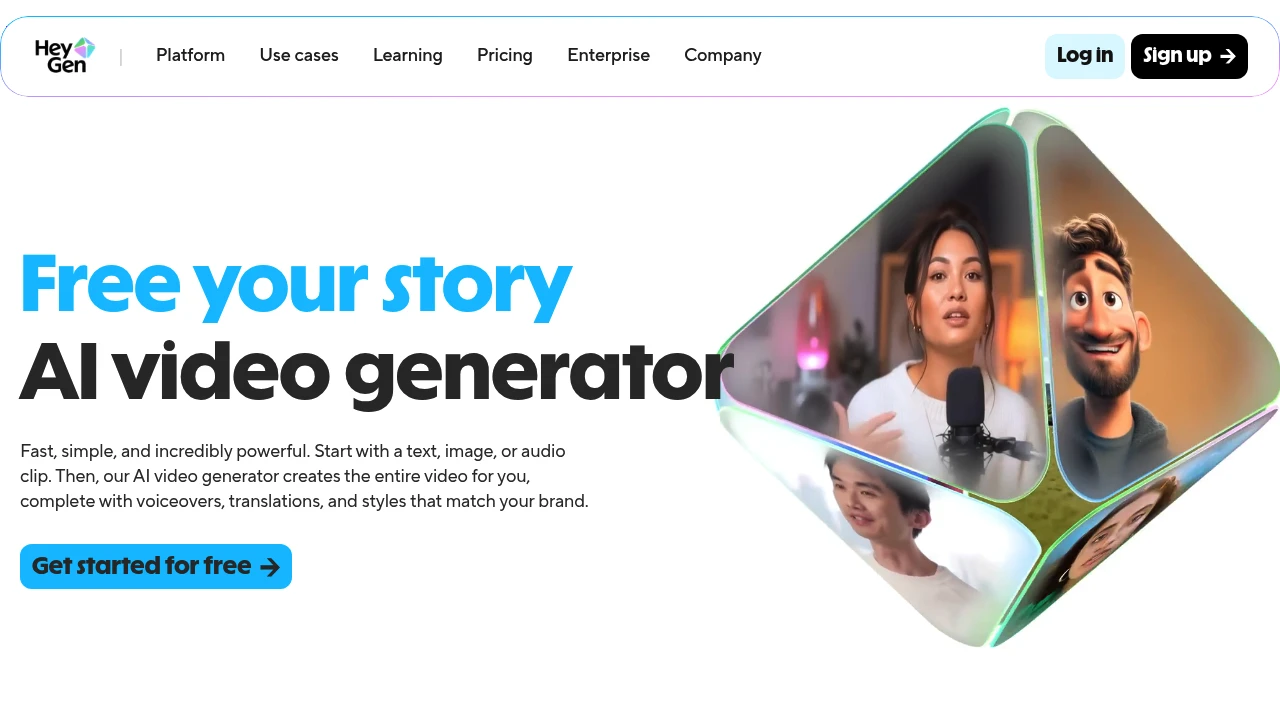
HeyGen transforms text into professional videos using AI avatars and voice synthesis. This platform helps businesses and content creators produce multilingual videos without cameras or studios.
Key Highlights
- Realistic AI avatars with smooth lip-syncing technology
- Support for 30+ languages with instant translation
- Voice cloning capabilities for personalized content
- 500+ stock avatars plus custom avatar creation
- Quick video generation without technical skills needed
- Team collaboration features for business use
What Makes It Different
HeyGen stands out with its focus on realistic avatar quality and seamless lip-sync technology. The platform offers true multilingual capabilities that go beyond simple dubbing.
Users can create custom avatars from photos and clone voices for authentic-feeling content. The combination of ease-of-use with professional output quality sets it apart from basic AI video tools.
Features & Capabilities
HeyGen creates videos from text scripts using AI avatars and synthetic voices. Users can choose from hundreds of pre-made avatars or upload photos to create custom ones. The platform handles voice cloning, allowing you to use your own voice across different languages.
Video creation works through a simple interface where you input text, select an avatar, and generate the final video. Common use cases include training videos, marketing content, product demos, and multilingual communications.
The platform exports videos in various resolutions up to 4K depending on your plan.
User Ratings and Testimonials
HeyGen has an average rating of 4.8 out of 5 stars from over 592 reviews on G2.
People love the realistic AI avatars and smooth lip-syncing. They find the platform easy to use and great for creating videos quickly. The translation features work well for reaching global audiences. Many praise the helpful customer support team.
Some say the pricing is high for heavy use. Others mention slow rendering times and occasional technical issues. A few note that avatar quality isn't quite as good as real recordings. Some want more customization options for backgrounds and text styling.
Pricing & Value
HeyGen offers several pricing plans:
- Free: $0/month for 3 videos per month, up to 3 minutes each, 720p export
- Creator: $29/month for unlimited videos up to 30 minutes, 1080p export, voice cloning
- Team: $39 per seat/month (minimum 2 seats) with 4K export, team collaboration, custom avatars
- Enterprise: Custom pricing with unlimited video duration, fastest processing, SAML SSO
The Free plan includes 1 custom video avatar, 500+ stock avatars, and 30+ languages.
HeyGen provides good value with its free tier offering actual video creation (not just trials) and competitive pricing for unlimited video generation compared to similar AI video tools.
Similar proprietary alternatives:

 bisibility — Free beta: Track your website’s keywords, Google rankings, Search Console insights, and share of voice.


